

Complete Guide to Rental Income Potential in Oahu
Did you know that Oahu’s median home prices are projected to hit $1.2 million by 2025, with rental incomes averaging around $4,500 each month? For property investors, these numbers highlight significant income opportunities in Hawaii’s most sought-after market. With tourist demand, diverse rental options, and strict local rules shaping every decision, understanding what drives true rental income potential can make the difference between average gains and standout success.

Table of Contents
- Rental Income Potential in Oahu Defined
- Types of Rental Properties and Income Streams
- Legal Regulations and HOA Rental Policies
- Rental Income Yields and Market Factors
- Risks, Costs, and Tax Implications
Key Takeaways
| Point | Details |
|---|---|
| Rental Income Potential | Investors in Oahu can expect a median home price of $1.2 million by 2025 with average rental incomes around $4,500 per month. |
| Diverse Rental Strategies | Oahu offers multiple rental types, including short-term and long-term options, each targeting different tenant demographics and requiring unique regulatory compliance. |
| Legal Compliance | Short-term rentals face strict regulations in Oahu, necessitating permits and adherence to local ordinances to avoid penalties and manage rental operations. |
| Financial Considerations | Investors must anticipate various costs associated with property management, maintenance, and taxes, alongside understanding market dynamics that affect income stability. |
Rental Income Potential in Oahu Defined
Rental income potential in Oahu represents the financial opportunity generated by owning and renting out residential properties on this vibrant Hawaiian island. According to hawaiieliterealestate.com, investors can anticipate substantial returns, with median home prices projected to reach $1.2 million by 2025 and average rental incomes around $4,500 monthly.
The concept of rental income potential goes beyond simple monthly earnings. It encompasses multiple revenue streams including short-term vacation rentals, long-term residential leasing, and potential property appreciation. estatefy.com highlights that profitability depends on several critical factors:
- Location specifics
- Type of rental property
- Local regulatory environment
- Seasonal tourism patterns
- Property management efficiency
Successful rental income generation in Oahu requires strategic planning and understanding of the local real estate market dynamics. Investors should consider factors like neighborhood desirability, proximity to attractions, property condition, and potential renovation costs. Some areas like Waikiki, Honolulu, and North Shore offer distinct rental market characteristics that can significantly impact income potential.

To maximize your rental income potential, research is key. Honolulu Rental Property Investment: 2025 Guide to Condos can provide deeper insights into navigating Oahu’s complex rental landscape. Understanding local trends, tourist preferences, and investment strategies will position you to make informed decisions in this dynamic market.
Types of Rental Properties and Income Streams
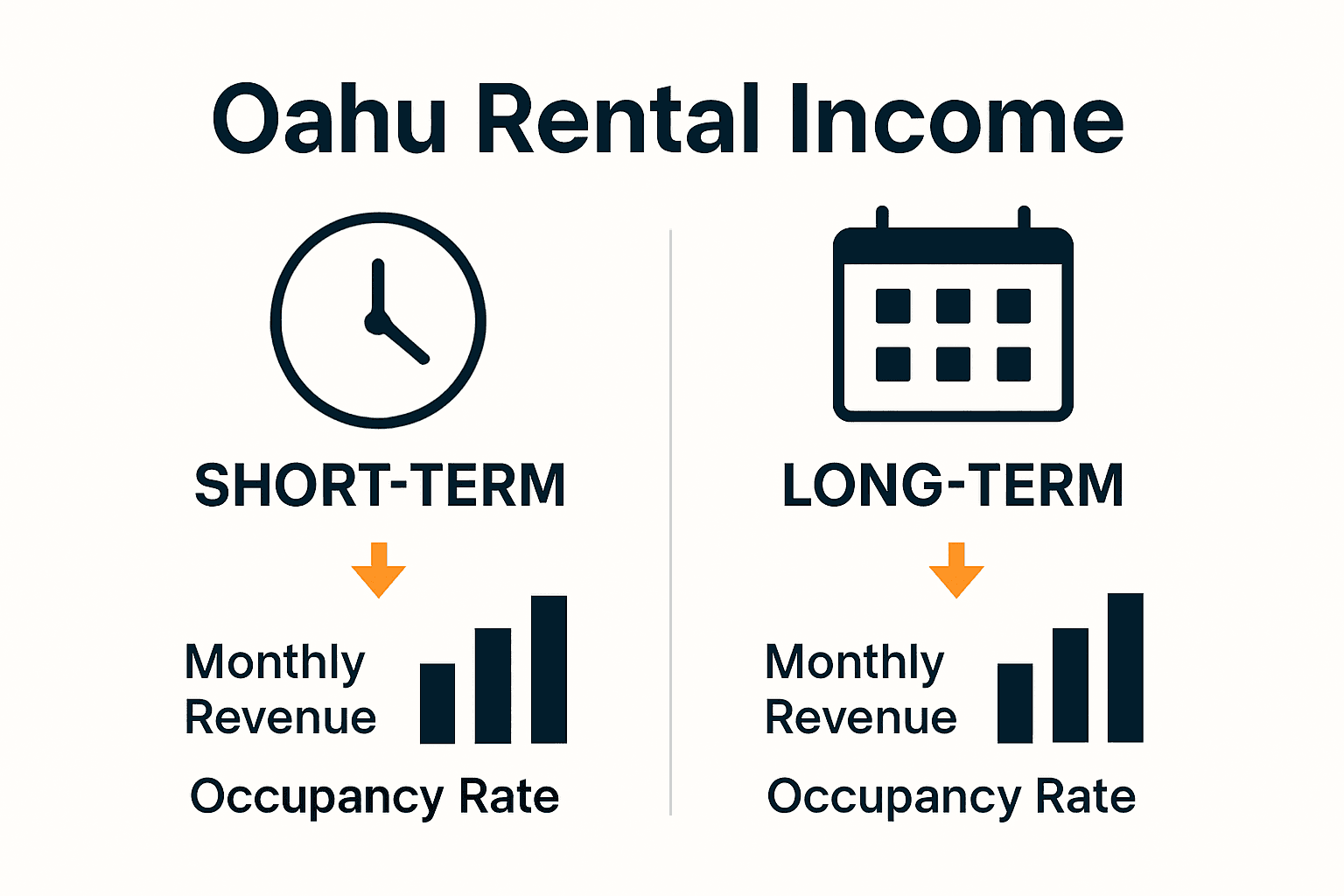
Oahu’s dynamic real estate market offers multiple rental property types that can generate diverse income streams for savvy investors. ourtaxpartner.com highlights four primary rental strategies: long-term residential rentals, short-term vacation rentals, mid-term rentals (30+ days), and specialized military housing rentals. Each category targets distinct tenant demographics and comes with unique regulatory considerations.
According to estatefy.com, the potential returns are compelling. Short-term rentals in premium locations like Waikiki and North Shore can generate substantial revenue:
- Nightly rates ranging from $200–$600
- Approximately 75% annual occupancy
- Long-term 2-bedroom apartment rentals averaging $2,900–$3,700 monthly
Successful investors typically diversify their rental portfolio across different property types. Condos in tourist-heavy areas work exceptionally well for short-term vacation rentals, while apartments near universities or business districts might attract long-term professional tenants. Understanding local zoning laws, homeowners association regulations, and neighborhood dynamics is crucial for maximizing rental income potential.
Here’s a summary of Oahu’s primary rental property strategies:
| Rental Type | Typical Income | Target Tenants | Key Regulations |
|---|---|---|---|
| Short-Term Vacation | $200–$600/night ~75% occupancy | Tourists | NUC required Strict zoning Licenses needed |
| Long-Term Residential | $2,900–$3,700/month (2-bed apartment) | Professionals Families | Less restricted HOA rules apply |
| Mid-Term (30+ days) | Variable Often higher than long-term | Relocating professionals Students | Some HOA and city limits |
| Military Housing | Stable government payments | Military families | Often government-approved only |
Complete Guide to Honolulu Rentals 2025 can provide deeper insights into navigating Oahu’s nuanced rental market. By carefully selecting properties and understanding each rental strategy’s unique advantages, investors can create robust and sustainable income streams in this vibrant Hawaiian real estate landscape.
Legal Regulations and HOA Rental Policies
Navigating the legal landscape of rental properties in Oahu requires careful understanding of complex local regulations. estatefy.com highlights that Honolulu enforces strict regulations on short-term rentals, particularly for properties outside designated resort areas like Waikiki. Investors must meticulously comply with local ordinances and secure necessary permits to legally operate rental properties.
According to ourtaxpartner.com, short-term vacation rentals face significant restrictions. Key regulatory requirements include:
- Obtaining a nonconforming use certificate (NUC)
- Ensuring legal resort zoning
- Limiting rentals to specific designated areas
- Complying with local municipal regulations
- Maintaining proper licensing and documentation
Homeowners Association (HOA) policies add another layer of complexity to rental operations. Each condominium complex may have unique rules governing rental activities, including:
- Minimum rental duration restrictions
- Annual rental caps
- Required approvals for tenant screenings
- Specific documentation requirements
- Potential additional fees for rental units
Waikiki Rental Restrictions 2025: Rules Owner Must Know provides an in-depth exploration of these nuanced regulations. Successful investors understand that thorough research and compliance are not just legal necessities, but critical strategies for sustainable and profitable rental property management in Oahu’s dynamic real estate market.
Rental Income Yields and Market Factors
Oahu’s rental market presents a complex and dynamic landscape for potential investors. homecohost.com reveals compelling insights, highlighting that vacation rentals in the area consistently achieve an impressive 75% occupancy rate with daily rates ranging between $250–$350. These rates are not static but fluctuate based on critical market factors including location specifics, property type, seasonal demand, and available amenities.
According to estatefy.com, investors must look beyond gross income and carefully evaluate net returns. Short-term rentals can generate higher gross revenues, but operational expenses significantly impact profitability:
- Management fees: 20–35% of gross income
- Regular cleaning costs
- Utility expenses
- Potential vacancy periods
Successful rental property investors in Oahu understand that market positioning goes beyond simple pricing strategies. Location remains paramount, with properties near popular attractions, beaches, and transportation hubs typically commanding premium rates. Factors like proximity to Waikiki, North Shore surf spots, or business districts can dramatically influence rental yields.
Investors should also consider seasonal variations and emerging tourism trends. While peak tourist seasons offer higher rental rates, understanding year-round demand patterns and maintaining competitive pricing will be crucial for sustained income generation. Diversifying rental strategies and maintaining flexible approach can help mitigate market fluctuations and optimize overall investment returns.
Risks, Costs, and Tax Implications
hawaiieliterealestate.com highlights the significant financial considerations for Oahu rental property investors. The investment landscape requires careful navigation through multiple financial obligations, including mortgage payments, property taxes, insurance, and ongoing maintenance expenses. Limited property diversification opportunities due to the island’s geographical constraints add an additional layer of strategic complexity for investors.
According to estatefy.com, short-term rental strategies come with nuanced financial implications:
- Management fees ranging from 20–35% of gross income
- Substantial cleaning and utility expenses
- Potential income fluctuations during vacancy periods
- Significant legal compliance costs
Tax implications represent another critical consideration for rental property owners. Hawaii’s unique tax structure includes specific regulations for investment properties, with potential impacts on:
- State income tax reporting
- Capital gains considerations
- Potential deductions for rental-related expenses
- Differences between short-term and long-term rental tax treatments
Investors must also factor in risk mitigation strategies. This includes maintaining comprehensive insurance coverage, establishing robust financial reserves, and developing contingency plans for unexpected market shifts or regulatory changes. Understanding the intricate balance between potential returns and comprehensive financial obligations will be crucial for sustainable and profitable rental property investment in Oahu’s dynamic real estate market.
Unlock Your Rental Income Potential with Expert Condo Insights
Investing in Oahu rental properties comes with challenges like navigating zoning laws, understanding HOA rental policies, and optimizing income streams from vacation and long-term rentals. You want to maximize your returns while avoiding costly missteps caused by unclear regulations or poorly chosen locations. This is where detailed knowledge of neighborhood trends, rental yield expectations, and legal complexities becomes invaluable.
Discover how our tailored resources at BuyOahuCondos.com can help you confidently explore rental income opportunities. Whether you are targeting lucrative vacation rentals or stable long-term leases, our Honolulu Condo Investment Guides | ROI & Rental Tips provide practical strategies to boost profitability while managing risks effectively.

Ready to turn your investment dreams into reality? Browse our listings and expert market updates in Vacation Rentals | Honolulu Condos for Sale to find the perfect property that fits your rental income goals. Act now to gain a competitive edge in Oahu’s dynamic rental market with reliable information and personalized support at BuyOahuCondos.com. Your path to smart investing starts here.
Frequently Asked Questions
What is the rental income potential in Oahu?
Rental income potential in Oahu involves multiple revenue streams from properties, including short-term vacation rentals and long-term leasing options, with substantial returns anticipated due to high demand.
What types of rental properties can investors consider in Oahu?
Investors can consider various rental property types in Oahu, including short-term vacation rentals, long-term residential rentals, mid-term rentals, and specialized military housing, each targeting different tenant demographics.
What are the main legal regulations for rental properties in Oahu?
In Oahu, key regulations include obtaining a nonconforming use certificate (NUC) for short-term rentals, ensuring compliance with local zoning laws, and adhering to homeowners association (HOA) policies if applicable.
What factors influence rental income yields in Oahu?
Rental income yields in Oahu are influenced by factors such as location, property type, seasonal demand fluctuations, and available amenities, as well as ongoing operational costs like management fees and maintenance expenses.







7 Comments