Cheap Vacation Rentals Waikiki Buyers Should Study
A low nightly rate in Waikiki can mean one of two things. You found a rare value play in one of Oahu’s most recognizable rental markets, or you found a unit in a building with trade-offs that matter more than the discount.
That distinction is exactly where buyers get into trouble.
If you’re searching cheap vacation rentals Waikiki, you may be thinking like a traveler. But if you’re considering buying a condo in Waikiki, you need to think like an owner first. The right purchase is not just about what looks inexpensive on a booking site or what seems affordable compared with oceanfront luxury towers. It comes down to the building’s rental policy, monthly carrying costs, management quality, condition, and how the location performs over time.
For buyers, especially investors and second-home shoppers, the better question is not simply where to find cheap vacation rentals in Waikiki. It’s which buildings offer a lower entry price without creating expensive ownership problems later.
What “cheap” really means in Waikiki
In Waikiki, cheap is relative. A unit may look affordable because the asking price is lower than neighboring towers, but that lower price often reflects something specific. Sometimes it’s a smaller footprint, no parking, older interiors, limited amenities, high HOA fees, deferred maintenance, or stricter financing challenges.
That does not automatically make it a bad buy. In fact, some of Waikiki’s more affordable buildings appeal to buyers who care more about walkability and rental demand than about luxury finishes. But the numbers have to work beyond the purchase price.
A lower acquisition cost paired with high monthly fees can erase the advantage quickly. The same is true if a building has weak reserves, an upcoming assessment, or rental restrictions that limit your intended use.
This is why buyers should treat cheap vacation rentals Waikiki as a starting point for analysis, not the finish line.
Cheap vacation rentals Waikiki: traveler appeal vs buyer value
Travel demand and buyer value overlap, but they are not identical.
A budget-friendly unit near the beach, International Market Place, Kalakaua Avenue, and dining usually has obvious guest appeal. That supports occupancy. But ownership economics depend on more than occupancy. You also need to evaluate whether the building is easy to insure, finance, and maintain, and whether the unit’s layout and condition support steady bookings or future resale.
A condo can perform well as a short-term rental and still be a weak purchase if the building is poorly managed. On the other hand, a unit in an older building with modest finishes might produce solid long-term value if the HOA is stable, reserves are healthier than expected, and the location keeps attracting visitors.
That is where building-level analysis matters more than broad neighborhood hype.
Start with Waikiki zoning and rental legality
Before comparing cash flow or amenities, confirm what type of rental activity is actually allowed.
This is one of the biggest mistakes buyers make when they shop Waikiki casually. They assume every condo near the beach can be used as a legal vacation rental. That is not the case. Some buildings allow resort-style transient use, some permit only longer-term rentals, and some have mixed usage patterns that require careful review of governing documents, house rules, and current enforcement realities.
If your purchase depends on nightly rental income, legality is not a minor detail. It is central to value.
A cheaper unit in a building that does not support your intended rental strategy may be more expensive than a higher-priced condo in a properly positioned building. Paying less upfront does not help if you cannot operate the property the way you planned.
The real numbers: where affordable deals get complicated
When buyers look at lower-priced Waikiki condos, three cost categories tend to change the story.
The first is HOA dues. Older buildings can have surprisingly high monthly fees, especially if utilities are included or if the property has aging systems. High dues are not always a deal-breaker, but they need to be weighed against rental income potential and resale competitiveness.
The second is special assessments. In Waikiki, some older towers face ongoing repair cycles tied to elevators, plumbing, façade work, fire life safety upgrades, or common-area improvements. A unit can look attractively priced because the market has already discounted future costs.
The third is property management and turnover costs. If you are buying a unit intended to compete in the lower-priced vacation rental tier, guest expectations still matter. Clean interiors, updated baths, efficient cooling, strong Wi-Fi, and easy check-in matter even more when travelers are comparing value options.
Budget rentals still require operational discipline.
Which building features matter most for lower-priced Waikiki rentals
Amenities help, but they are not always the deciding factor for affordable rentals in Waikiki.
For many guests, location and function matter more than a high-end lobby. A smaller condo a few blocks from the beach can outperform a larger one in a less convenient pocket if it is walkable, comfortable, and well maintained. Buyers should pay close attention to practical features like usable lanais, air conditioning setup, laundry access, elevators, security, and whether the building presents well despite its age.
Parking is another variable that depends on your target renter. For some travelers, no parking is acceptable if the unit is in central Waikiki near shopping, dining, and transit. For others, especially domestic travelers planning to explore Oahu by car, parking improves appeal and can support stronger rates.
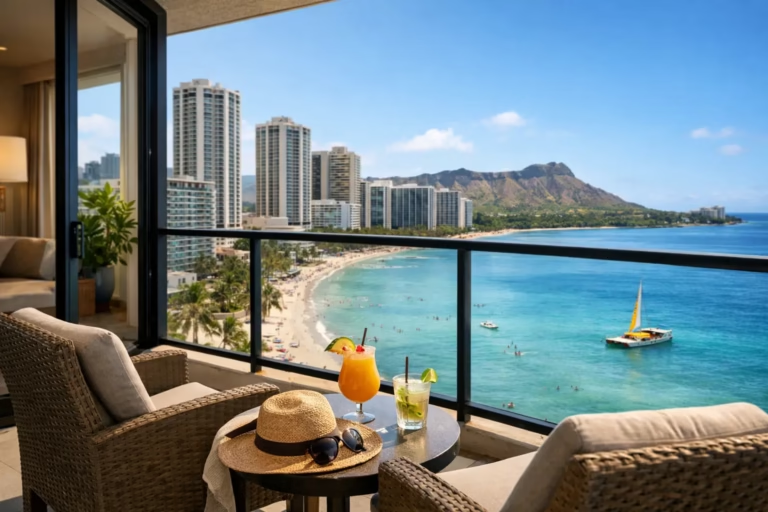
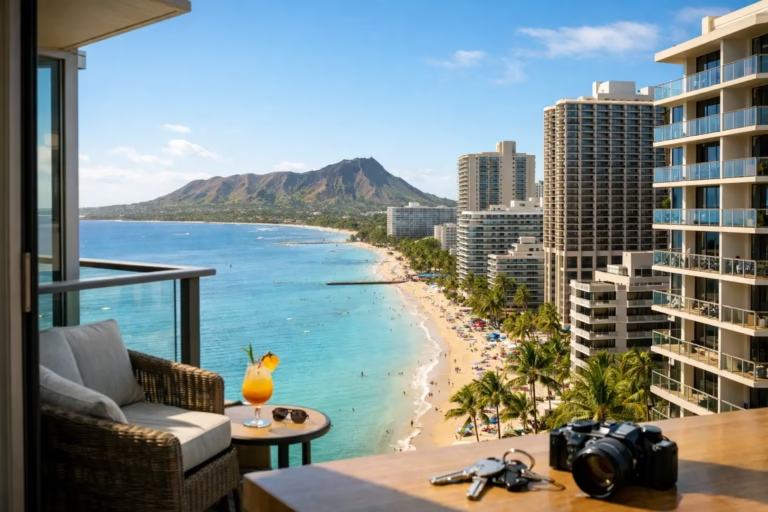
Views also create pricing separation. Partial ocean, canal, Diamond Head, or city views can materially affect rental demand and resale, even in otherwise modest buildings. But view premiums need to be balanced against total cost. A slightly less dramatic view in a stronger building can be the smarter buy.
Affordable does not mean all of Waikiki performs the same
Waikiki is compact, but micro-location still matters.
Units closer to the beach and major visitor corridors usually carry stronger tourist appeal, but they also come with more noise, tighter inventory, and often higher pricing. Buildings on the quieter edges of Waikiki may offer better entry points for buyers who want lower acquisition cost and a little more breathing room.
The Ala Wai side, for example, can present more affordable options than prime oceanfront or near-beach blocks. That can work well for buyers who understand the trade-off: less immediate resort feel, but often more price flexibility and in some cases larger interior space. The key is to compare that discount against walkability, guest perception, and future resale demand.
There is no universal best pocket. It depends on whether you prioritize legal short-term rental capability, personal use, long-term hold value, or the lowest possible basis.
How smart buyers screen cheap vacation rentals in Waikiki
A practical review starts with the building, not the unit photos.
Check whether the building’s rental rules align with your intended use. Then review HOA dues, reserve funding, recent assessments, insurance posture, and known capital projects. After that, compare unit-specific factors like renovation quality, view, noise exposure, maintenance condition, and any monthly leasehold obligation if the property is not fee simple.
That last point matters. Some Waikiki condos are leasehold, and the lower purchase price can look very attractive at first glance. But lease terms, renegotiation risk, financing limitations, and long-term exit strategy need careful attention. For some buyers, leasehold can still make sense. For others, it creates too much uncertainty.
This is also where buyers should avoid judging value based only on nightly rental chatter. A building with lots of vacation activity is not automatically a better investment. You still need to understand ownership friction, competition within the building, and the condition of the common areas that support guest reviews and resale perception.
When a cheap Waikiki rental is actually a good buy
The best affordable opportunities usually share a few traits. The building has clear rental rules, the monthly fees are understandable, the location is consistently usable for visitors, and the unit itself does not require an immediate cash infusion just to become marketable.
You do not need a trophy property to make a smart Waikiki purchase. Some buyers do very well by focusing on older but functional buildings where the economics are transparent and the guest experience is still solid. Others are better served by stretching the budget for a better-positioned building with healthier reserves and fewer long-term surprises.
The right answer depends on your hold period, financing plan, personal use goals, and tolerance for operational complexity.
If you’re trying to sort through Waikiki condo options at the building level, that is where a focused platform like BuyOahuCondos.com can help narrow the field faster. Comparing by tower, fee structure, and rental fit is far more useful than browsing Waikiki as if every condo works the same way.
The better question to ask before you buy
Instead of asking where the cheapest vacation rental in Waikiki is, ask which condo gives you the strongest mix of legality, location, manageable fees, and future resale potential.
That question usually leads to better decisions.
Waikiki can absolutely offer lower-cost entry points compared with many other resort markets, but the good deals are rarely random. They tend to show up when a buyer understands how building policy, ownership costs, and guest appeal fit together. If a condo checks those boxes, affordable can mean opportunity rather than compromise.