

Oahu Zoning Explained: Impact on Condo Buyers
Most American homebuyers are surprised to learn that zoning laws control nearly every building project on Oahu. These regulations play a powerful role in what gets built and where, influencing everything from condo density to neighborhood look. For anyone interested in Oahu real estate, understanding the most common zoning myths and the real facts can make a difference in smarter investments and fewer surprises during the buying process.
Table of Contents
- Oahu Zoning Basics And Common Myths
- Major Zoning Types Affecting Oahu Condos
- How Zoning Determines What Can Be Built
- Legal Framework: Honolulu Land Use Ordinance
- Zoning Risks, Restrictions, And Investment Impact
Key Takeaways
| Point | Details |
|---|---|
| Understanding Zoning’s Role | Zoning regulations are strategic frameworks that balance community character with residential growth, rather than merely restricting development. |
| Common Myths | Many buyers mistakenly believe zoning laws completely prevent new construction, when they actually enable responsible development through specific regulations. |
| Significance of Zoning Types | Different zoning types, such as Apartment Districts and Mixed Use zones, directly affect property development and investment potential for condos in Oahu. |
| Zoning Risks and Investment | Navigating Oahu’s zoning landscape involves understanding investment risks associated with regulatory restrictions, which can influence property values and appreciation. |
Oahu Zoning Basics and Common Myths
Oahu’s zoning regulations form a complex landscape that significantly impacts real estate development and property ownership. Understanding these regulations is crucial for potential condo buyers navigating the local housing market. Zoning laws in Hawaii represent a delicate balance between preserving community character and enabling residential growth.
Contrary to popular belief, zoning is not simply about restricting development but creating strategic frameworks for sustainable urban planning. Many buyers mistakenly assume zoning laws arbitrarily limit construction, when in reality, these regulations aim to manage land use efficiently. Zoning research reveals that thoughtful zoning can actually create more housing opportunities by allowing diverse residential configurations without compromising neighborhood integrity.
Some common myths about Oahu zoning persist among potential buyers. First, many believe zoning regulations completely prevent new construction, which is false. While restrictions exist, they are designed to guide responsible development. Another prevalent misconception is that zoning laws are inflexible bureaucratic barriers. In truth, these regulations can be nuanced, with potential for variances and special permits that allow innovative housing solutions. Understanding these subtleties can help buyers make more informed decisions about potential condo investments.
To successfully navigate Oahu’s zoning landscape, prospective condo buyers should prioritize research and potentially consult local real estate professionals who understand the intricate local regulations. By demystifying zoning rules and recognizing their strategic purpose, buyers can better appreciate how these frameworks shape Oahu’s unique residential environment.
Major Zoning Types Affecting Oahu Condos
Understanding the zoning types is critical for potential condo buyers in Oahu, as these classifications directly impact property development, use, and investment potential. Honolulu’s Land Use Ordinance defines several key zoning districts that shape the residential landscape, with each designation carrying specific implications for condo ownership and development.
The primary zoning types relevant to condo buyers include Apartment Districts and Apartment Mixed Use Districts. Zoning classifications range from low-density (A-1) to medium-density (A-2) apartment zones, each with unique regulatory requirements. For instance, A-1 districts typically allow lower-rise buildings with more restrictive development standards, while A-2 zones permit higher-density residential configurations that can accommodate more expansive condo projects.
Apartment Mixed Use (AMX) zones offer particularly interesting opportunities for condo buyers. These districts blend residential and commercial uses, creating dynamic urban environments that can provide additional amenities and potential investment value. The AMX-1, AMX-2, and AMX-3 classifications progressively allow more complex mixed-use developments, giving buyers options that range from quiet residential settings to more vibrant, multi-purpose urban spaces. Condo purchase considerations become more nuanced when navigating these specialized zoning types.
Navigating Oahu’s zoning landscape requires careful analysis and potentially professional guidance. Each zoning designation comes with specific height restrictions, density limitations, parking requirements, and permitted uses that can significantly impact a condo’s livability, rental potential, and long-term value. Prospective buyers should thoroughly research these zoning details, understanding how they might affect their specific housing goals and investment strategies.
How Zoning Determines What Can Be Built
Zoning regulations serve as the fundamental blueprint for urban development, acting as a comprehensive framework that dictates precisely what can be constructed on any given parcel of land. Land Use Ordinances provide intricate guidelines that control every aspect of potential construction, from building height and density to specific permitted uses and architectural configurations.
The specific zoning designation of a property determines its development potential with remarkable precision. Development standards embedded within zoning classifications specify critical parameters such as maximum building heights, minimum setback requirements, lot coverage percentages, and total allowable floor area. Zoning classifications create a structured environment where each parcel has predefined limitations and opportunities, ensuring that new constructions align with broader urban planning objectives and maintain neighborhood character.
For condo developers and potential property owners, understanding these nuanced regulations becomes crucial. Different zoning types impose unique constraints that can dramatically impact construction feasibility. Residential zones might limit building heights to preserve neighborhood aesthetics, while mixed-use zones could allow more flexible development strategies. Condo purchase considerations become significantly more complex when navigating these intricate regulatory landscapes, requiring careful analysis of zone-specific requirements.
Ultimately, zoning regulations represent a delicate balance between individual property rights and community development goals. They protect existing neighborhood characteristics while simultaneously providing structured pathways for responsible urban growth. Prospective buyers and developers must view these regulations not as restrictive barriers, but as sophisticated mechanisms designed to create harmonious, well-planned urban environments that balance individual needs with collective community interests.
Legal Framework: Honolulu Land Use Ordinance
Land Use Ordinances represent the cornerstone of urban development regulation in Honolulu, providing a comprehensive legal framework that governs how land can be used, developed, and transformed. These ordinances are more than just bureaucratic documents; they are sophisticated tools that balance individual property rights with broader community planning objectives, ensuring sustainable and strategic urban growth across Oahu.
The Honolulu Land Use Ordinance systematically categorizes land into specific zoning districts, each with precise regulations that dictate permissible uses, building heights, density, and architectural requirements. Zoning classifications are meticulously crafted to maintain neighborhood character while allowing for responsible development, creating a structured approach that prevents incompatible land uses and protects community interests.
For condo buyers and real estate investors, understanding these legal frameworks is crucial. The ordinance provides explicit guidelines on everything from setback requirements and lot coverage to parking provisions and environmental considerations. These regulations directly impact property values, development potential, and investment viability. Honolulu rental considerations become significantly more complex when navigating these intricate legal requirements, making comprehensive knowledge essential for informed decision making.
Ultimately, the Honolulu Land Use Ordinance functions as a dynamic blueprint for urban development, continuously evolving to address changing community needs and emerging urban challenges. It represents a delicate balance between preserving Oahu’s unique environmental and cultural landscape while providing structured pathways for sustainable growth. Prospective property owners must view these regulations not as restrictive barriers, but as sophisticated mechanisms designed to protect and enhance the island’s long-term livability and economic potential.
Zoning Risks, Restrictions, and Investment Impact
Proposed legislative changes are dramatically reshaping Oahu’s real estate investment landscape, introducing complex risks and opportunities for potential condo buyers. Zoning regulations represent more than bureaucratic rules – they are strategic mechanisms that directly influence property values, development potential, and long-term investment strategies.
The investment risks associated with zoning can be substantial, particularly in markets with restrictive land use policies. Restrictive zoning laws can significantly limit development potential, creating scenarios where property appreciation becomes constrained by regulatory limitations. These constraints can unexpectedly impact investment returns, making thorough due diligence critical before committing to any real estate purchase.
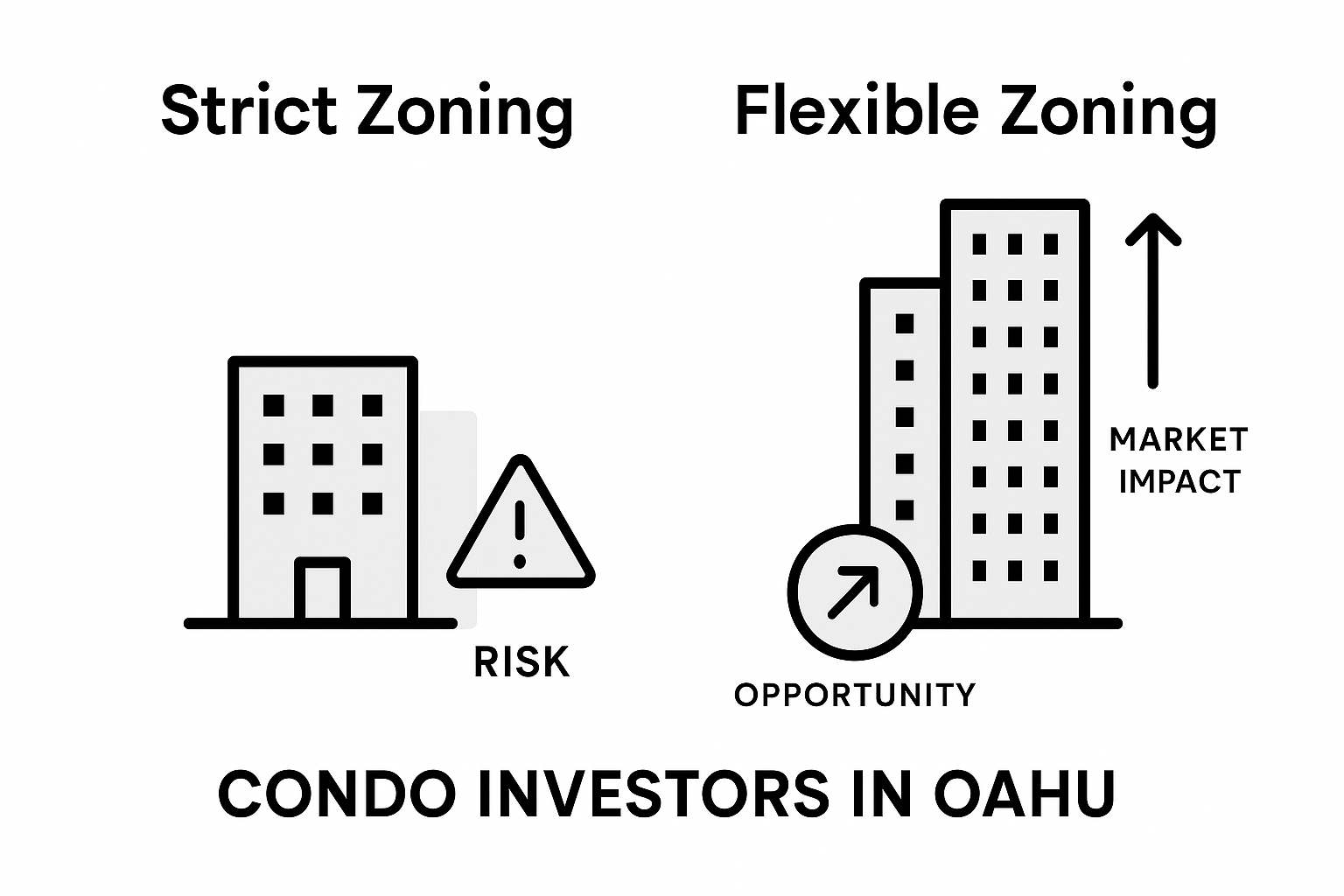
Investment condo risks become particularly nuanced when zoning regulations intersect with market dynamics. Potential investors must consider how current zoning classifications might change, potential rezoning efforts, and how these factors could influence property values. Critical considerations include understanding density restrictions, permitted uses, potential future development in surrounding areas, and how these elements might affect long-term investment potential.
Navigating Oahu’s zoning landscape requires a sophisticated approach that balances regulatory understanding with strategic investment thinking. Successful investors recognize that zoning is not a static constraint but a dynamic framework that can present both challenges and opportunities. Prospective buyers must develop a comprehensive view that considers not just current zoning regulations, but potential future changes that could dramatically influence property values and investment potential.
Master Oahu Zoning and Make Confident Condo Choices Today
Navigating Oahu’s complex zoning rules can feel overwhelming when you are searching for the perfect condo. From understanding apartment mixed use districts to deciphering height and density restrictions, these zoning details directly affect your investment potential and lifestyle. If you want to transform zoning challenges into opportunities explore our Oahu Condo Buying Tips | Honolulu & Waikiki Advice for expert guidance tailored to local regulations and market dynamics.

Start your journey by diving into detailed information on how zoning impacts property use and value. Use our Oahu Neighborhood Condo Guides | Waikiki, Honolulu, Ko Olina to connect zoning nuances with specific neighborhoods and uncover which areas align with your goals. Visit BuyOahuCondos.com to access up-to-date listings, powerful search tools, and personalized support that empowers you to act now with clarity and confidence.
Frequently Asked Questions
What are the main zoning types that affect condo buyers in Oahu?
The primary zoning types include Apartment Districts and Apartment Mixed Use Districts, which vary in density and development standards, affecting what can be built and the overall investment potential.
How do zoning regulations impact property development on Oahu?
Zoning regulations provide a framework that dictates building height, density, and permitted uses, which directly influence the feasibility of property development and overall property values.
Can zoning laws be changed, and how could that affect my condo investment?
Yes, zoning laws can be changed through legislative action. Potential rezoning efforts could either increase or limit development potential, thus impacting property values and investment strategies.
What should I consider regarding zoning before purchasing a condo?
It is essential to research zoning classifications, understand development standards, and consult real estate professionals to evaluate how zoning might impact livability, rental potential, and long-term value.
Recommended
- 7 Pros and Cons of Oahu Condos Every Buyer Should Know | Honolulu Condos for Sale | BuyOahuCondos.com
- 7 Key Things to Know About High Schools on Oahu | Honolulu Condos for Sale | BuyOahuCondos.com
- Essential Guide to Oahu Condo Rules for Buyers | Honolulu Condos for Sale | BuyOahuCondos.com
- Oceanfront Condos Oahu: 2025 Comprehensive Buyer’s Guide
- Complete Guide to Guidelines for First-Time Buyers – Craigburn Capital






4 Comments