Short Term Rentals Waikiki Hawaii Explained
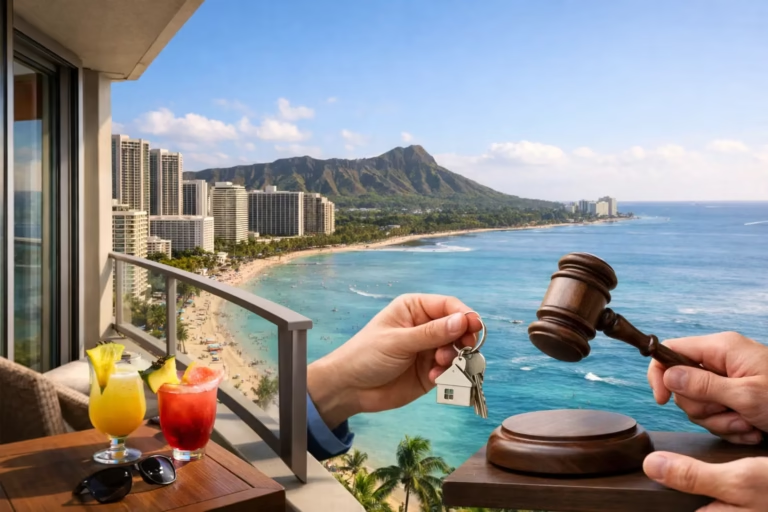
A condo two blocks from Waikiki Beach can look like a perfect vacation-rental play on paper – until you read the house rules, the zoning map, and the latest enforcement language. That is why buyers searching short term rentals Waikiki Hawaii need to look past photos, nightly rate estimates, and even location. In Waikiki, the real question is not just whether a unit is attractive to visitors. It is whether the building, the zoning, and the ownership economics actually support the rental use you have in mind.
For condo buyers, this is where mistakes get expensive. A unit can be in a popular area and still be a poor short-term rental candidate if the building restricts rentals, the HOA is strict, or fees eat away at cash flow. Waikiki remains one of Oahu’s most recognized visitor markets, but that does not mean every condo in Waikiki should be treated as a legal or practical vacation rental.
How short term rentals in Waikiki Hawaii really work
The biggest misunderstanding is assuming neighborhood demand equals rental permission. Waikiki does have a concentration of properties historically associated with visitor use, but condo eligibility for short-term rental activity depends on more than tourist appeal. Buyers need to confirm zoning, permitted use, building bylaws, house rules, and any site-specific management restrictions.
That means two units with similar views and similar prices can have very different value depending on rental flexibility. One may be suitable for nightly stays, another may only allow longer rental periods, and a third may be owner-occupant oriented with rules that make short-term use unrealistic even if the location feels ideal.
This is why building-level due diligence matters so much in Honolulu. Waikiki is not a single product type. It includes condotels, mixed-use towers, older leasehold inventory, fee simple condos, investor-oriented buildings, and owner-occupied communities with very different priorities.
Why buyers focus on Waikiki for rental income
Waikiki continues to draw buyer interest because it offers a combination that is hard to replicate elsewhere on Oahu. The area has global name recognition, year-round visitor demand, strong walkability, beach access, dining, retail, and a large inventory of smaller condo units that can appear more approachable from a price standpoint than luxury residential towers in nearby submarkets.
For some buyers, the appeal is partly financial and partly personal. They want a property they can use occasionally while generating income during the rest of the year. Others are pure investors comparing occupancy potential, carrying costs, and exit value. There are also second-home buyers who may not need maximum rental income but want flexibility.
The trade-off is that high demand does not eliminate complexity. In fact, Waikiki’s popularity tends to increase scrutiny around legal use, management quality, and operating costs.
What to verify before buying a Waikiki condo for short-term use
If your goal is to buy with rental income in mind, the first layer is legal use. You need to verify the property’s zoning and whether the unit is actually eligible for the type of rental duration you plan to offer. That review should be specific to the property, not based on a general assumption about Waikiki.
The second layer is the building’s governing documents. HOA bylaws and house rules may place limits on rental periods, registration procedures, guest access, front desk coordination, elevator use, or operational practices. Some buildings are functionally set up for transient occupancy. Others may allow ownership by investors but still create enough friction that short-term rental management becomes difficult.
The third layer is ownership economics. A condo that allows rentals is not automatically a good investment. Monthly HOA fees, special assessment risk, maintenance condition, reserve strength, insurance costs, and management structure all affect net performance. A unit with a lower purchase price can still underperform if the building has weak reserves or unusually high recurring costs.
The buildings matter more than the postcard view
Buyers often start with unit features – ocean view, lanai, updated kitchen, or proximity to the beach. Those things matter, but in Waikiki the building often has more impact on the outcome than the granite countertops.
A well-located unit in a poorly run building can become a headache fast. Deferred maintenance, ongoing plumbing issues, elevator problems, or unstable HOA finances can hurt both rental operations and resale appeal. On the other hand, a more modest unit in a well-understood building with clear rental policy, predictable operations, and healthier reserves may be the safer long-term hold.
This is especially true for out-of-state buyers. If you are not living on Oahu full time, you need a property that is operationally straightforward. Reliable building systems, clear access procedures, and a rental-friendly setup can matter more than one extra band of ocean view.
Rental policy, HOA fees, and reserves are not side issues
When buyers evaluate short term rentals in Waikiki Hawaii, the conversation often gets stuck on gross income potential. That number is useful, but it is only the first line on the spreadsheet. HOA fees can be substantial in Honolulu condo buildings, especially where amenities, staffing, and older infrastructure drive up operating costs.
Reserve health is just as important. If a building has underfunded reserves, future assessments can change the ownership equation quickly. Buyers should also look at the age and condition of major building systems, recent repair history, insurance trends, and whether the association has been proactive or reactive.
This is where experienced condo-focused guidance makes a difference. You are not only buying square footage. You are buying into a building’s financial culture, maintenance discipline, and rule structure.
Fee simple vs leasehold changes the analysis
In Waikiki, buyers will encounter both fee simple and leasehold condos. That distinction is critical. Fee simple ownership generally offers more straightforward long-term control and resale planning. Leasehold units can sometimes appear attractive because the entry price is lower, but the lease structure introduces additional variables that may not fit every buyer or investor.
For a rental-focused purchase, those variables can affect financing, appreciation expectations, exit timing, and overall predictability. A lower acquisition price does not always mean better value if the lease terms create future pressure points.
This does not mean leasehold should always be avoided. It means the buyer needs a clear understanding of how the land lease impacts the total investment picture.
Who should be cautious with a Waikiki short-term rental strategy
Not every buyer should pursue a short-term rental condo, even in a market as visible as Waikiki. If your budget is tight, your margin for unexpected building costs is limited, or you need financing terms that are already stretched, a nightly rental strategy may add too much operational and regulatory risk.
The same is true if you want a low-maintenance second home but are not prepared to manage guest turnover, local oversight, or variable occupancy. In some cases, a condo better suited to mid-term or long-term rental may be the more stable fit. It depends on your goals. Maximum flexibility, personal use, and predictable income do not always align in one property.
Buyers who usually do best here are the ones who treat Waikiki as a building-by-building market rather than a broad vacation-rental theme.
A smarter way to compare Waikiki condo opportunities
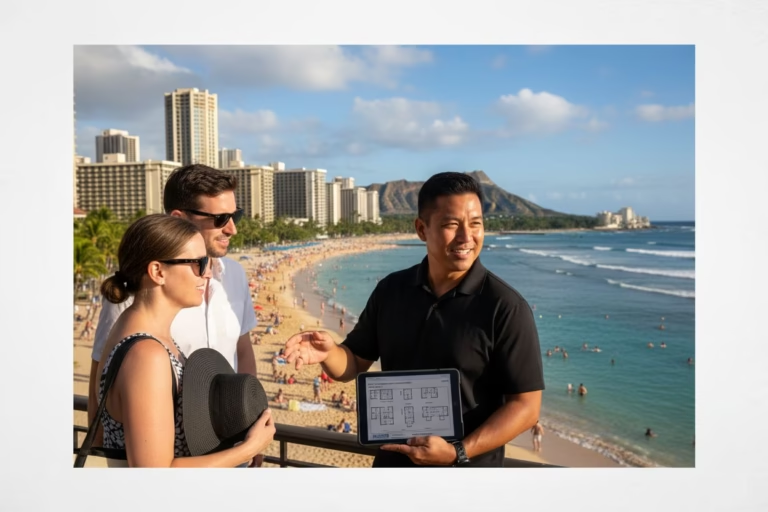
The strongest approach is to compare properties through a simple filter: legal use, building rules, carrying costs, and resale quality. That framework helps buyers avoid overpaying for units that look compelling online but fall apart under real due diligence.
A useful comparison starts with the intended use. Are you buying for personal stays with occasional income, or are you optimizing primarily for investment performance? From there, compare HOA fees, reserves, special assessment exposure, management quality, and how the building is perceived by both guests and future buyers.
That is also where a condo-specific platform like BuyOahuCondos.com can be helpful. Instead of treating Waikiki as one generic search area, buyers can narrow in on buildings, ownership structure, amenities, and rental policy factors that actually affect decision-making.
Waikiki can still be a compelling place to buy, but only when the condo matches the strategy. The buyers who move forward with the most confidence are usually the ones who slow down, verify the rules, and choose the building as carefully as they choose the view.