Which Waikiki Condo Amenities Matter Most?
A rooftop pool looks great in listing photos. The real question is whether it improves your day-to-day ownership experience enough to justify the monthly cost.
That is the right way to evaluate Waikiki condo resort amenities. In this market, amenities can meaningfully improve lifestyle, rental appeal, and resale positioning, but they can also push HOA fees higher, increase maintenance exposure, and create a gap between what looks impressive on paper and what actually gets used. If you are buying in Waikiki, it helps to compare amenities the same way you compare floor plans, views, and lease terms.
How buyers should evaluate Waikiki condo resort amenities
Waikiki has a wide mix of condo buildings. Some are true resort-style towers with pools, spas, fitness centers, valet service, and hotel-like common areas. Others are older, simpler buildings where the main appeal is location, lower carrying costs, or more straightforward ownership.
Neither model is automatically better. It depends on why you are buying.
If you want a second home you will use regularly, amenities can carry real lifestyle value. If you plan to hold as a long-term rental or are highly payment-sensitive, the better choice may be a building with fewer extras and more manageable monthly fees. For investors, the calculation gets even more specific. Amenities may support stronger guest appeal in legal rental situations, but only if the building’s rules, condition, and fee structure make sense.
The best comparison is not simply amenity count. It is amenity value relative to HOA fees, building age, reserve strength, and how the property fits your ownership goals.
The most common Waikiki condo resort amenities
In Waikiki, the core amenity package usually starts with a pool, sundeck, barbecue area, and secured entry. From there, buildings separate themselves with features like a fitness center, sauna, hot tub, surfboard storage, concierge service, valet parking, meeting rooms, recreation decks, and resort-style lobbies.
Luxury towers may add larger fitness facilities, private cabanas, multiple entertaining areas, and more polished service components. Mid-range buildings often focus on the basics that matter most to everyday use, like a clean pool deck, usable gym, resident parking, and on-site management.
Some amenities sound stronger in marketing than they perform in reality. A small gym with outdated equipment does not carry the same value as a well-maintained fitness room residents actually use. A pool is attractive, but if it is shaded most of the day or frequently closed for repairs, it becomes more of a cost center than a lifestyle feature. This is why building-level due diligence matters.
Pools, spas, and recreation decks
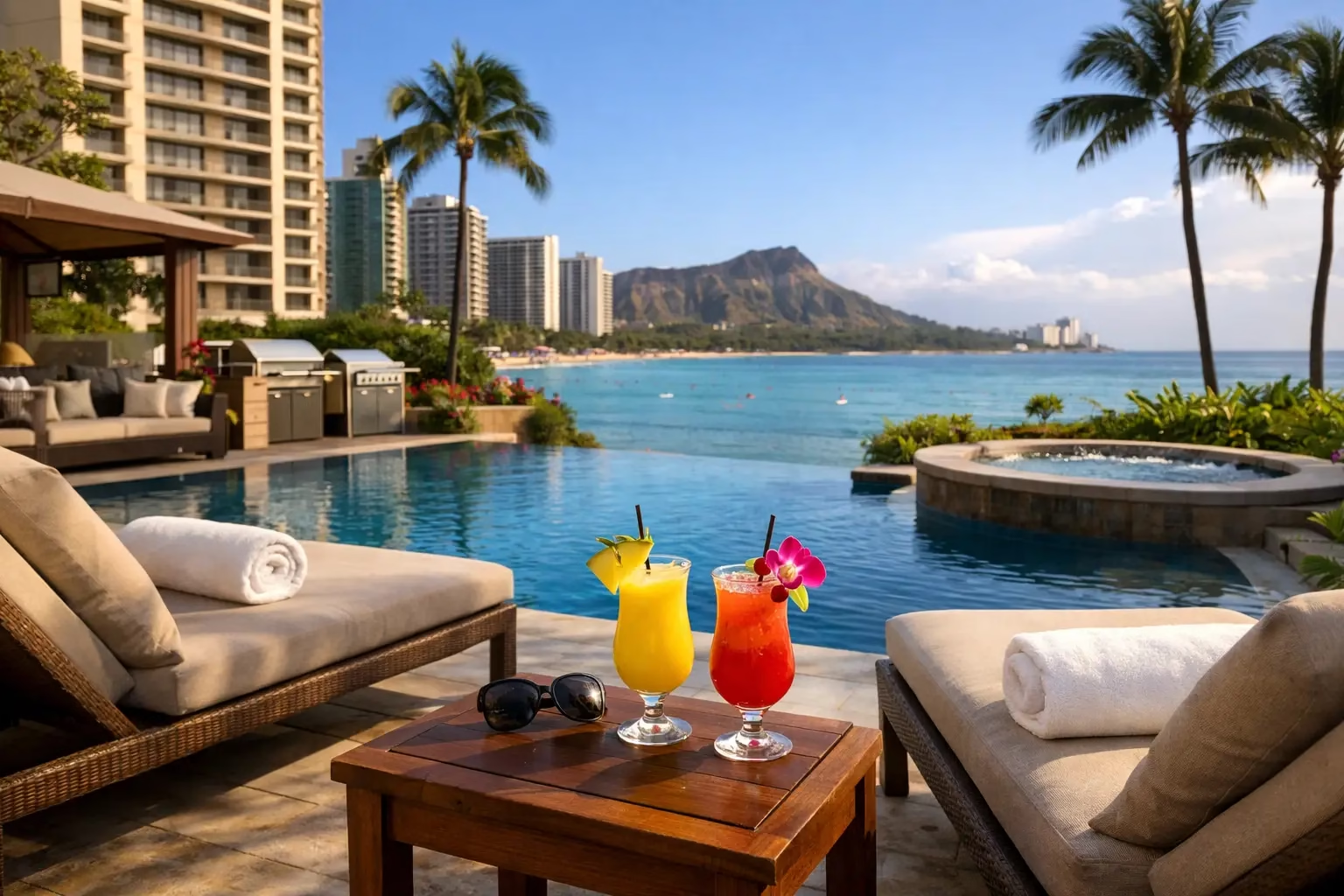
These are the amenities most buyers picture first, and in Waikiki they do matter. The climate supports year-round use, and many second-home buyers want a property that feels like a resort the moment they arrive.
That said, not all pool decks add equal value. Size, sunlight, privacy, maintenance history, and crowding all affect the ownership experience. In some mixed-use or condotel environments, shared amenity areas can feel busy or transient. In a more residential building, the same amenity may feel quieter and better cared for.
Fitness centers and wellness spaces
A real gym can be a major convenience in an urban neighborhood where space inside the unit is limited. For many owners, especially part-time residents, having a dependable workout space in the building reduces the need for outside memberships and adds practical value.
But this is also one of the most overestimated categories. A fitness center with a few machines in a converted room should not be valued like a full-service wellness offering. Buyers should ask whether the equipment is updated, air-conditioned, and consistently maintained.
Security, front desk, and controlled access
In Waikiki, security-related amenities often matter more than buyers expect. Secured entry, monitored elevators, front desk staffing, and visible building management can improve both peace of mind and building appeal.
This is particularly relevant for out-of-state owners, second-home buyers, and anyone who will leave the unit vacant for stretches of time. Strong building operations can also support resale value because buyers tend to notice immediately when a building feels orderly, secure, and professionally run.
Parking, storage, and owner convenience
These may not sound glamorous, but they often shape satisfaction more than leisure amenities do. Covered parking, guest parking, bike or surfboard storage, package handling, and convenient loading areas can make ownership in Waikiki much easier.
For full-time residents, convenience features may be more useful than a splashy amenity deck. For part-time owners, lock-and-leave ease matters. For investors, owner convenience may be less important than guest appeal, but it still affects marketability and operations.
What amenities do to HOA fees
This is where the conversation gets real. More amenities usually mean more staffing, more maintenance, more insurance exposure, and more long-term repair obligations.
A building with pools, elevators, front desk service, recreation areas, and extensive common elements will generally carry higher monthly fees than a simpler property. That does not make the fees unreasonable. It means buyers need to understand what they are paying for and whether the building’s financial management supports those expenses.
A low-fee building is not automatically a bargain if it has deferred maintenance or weak reserves. A high-fee building is not automatically overpriced if it is well run, physically maintained, and offering amenities owners consistently use. The key is whether the fee level is supported by the building’s condition, reserve funding, and overall ownership experience.
When comparing Waikiki condo resort amenities, always connect the lifestyle story to the balance sheet.
Amenities and rental strategy
In Waikiki, buyers often ask whether better amenities translate into better rental performance. Sometimes yes, but the answer depends heavily on the building’s legal use, house rules, and market positioning.
If a building allows the type of rental strategy you want, amenities can help your unit compete. Guests and tenants respond to pools, fitness centers, proximity to the beach, and the sense of staying in a well-equipped property. However, rental success is never driven by amenities alone. Unit condition, legal compliance, management setup, and total operating costs matter just as much.
This is also where buyers can make expensive assumptions. A resort-style building may look ideal for income, but if fees are high, rental rules are restrictive, or the building has frequent assessments, the economics may weaken quickly. On the other hand, a more modest building with solid management and lower monthly costs may produce a better ownership outcome.
Older buildings versus newer resort-style towers
Waikiki includes both legacy buildings and newer or more extensively updated towers. Newer buildings often offer stronger visual appeal and a more current amenity package, but they may come with significantly higher acquisition costs and fees.
Older buildings can still be strong options if they are well maintained and priced appropriately. Some buyers are better served by an older property in a prime location with basic amenities and better entry pricing than by stretching into a newer tower for features they may rarely use.
The trade-off is usually this: newer resort-style living can feel easier and more polished, while older buildings may offer better value but require closer review of reserves, plumbing, elevators, and renovation history. The right choice depends on whether your priority is turnkey convenience, cost control, or long-term upside.
A better way to compare buildings
When reviewing Waikiki condo resort amenities, avoid the trap of comparing buildings like hotels. Compare them like ownership platforms.
Start with your actual use case. Are you buying for full-time living, seasonal use, retirement, long-term rental, or part lifestyle and part investment? Then look at whether the building’s amenities support that purpose. After that, compare HOA fees, reserve strength, recent assessments, rental rules, parking, and overall building condition.
This process tends to narrow the field quickly. The building with the nicest brochure is not always the smartest purchase. The better choice is often the one where amenities, monthly cost, and building management are all in balance.
For buyers who want help comparing specific Waikiki buildings, BuyOahuCondos.com is most useful when you look beyond listings and start matching amenity packages to fees, rules, and ownership goals.
What smart buyers notice during a tour
During a showing, spend as much attention on the common areas as you do inside the unit. Look at hallway condition, elevator wait times, pool deck upkeep, gym quality, security presence, and how the lobby feels at different times of day.
Ask practical questions. Are amenities frequently closed for repairs? Is staffing consistent? Have there been recent or upcoming capital projects tied to common areas? Does the building feel primarily residential, or more like a transient visitor property? These details tell you more than staged photos ever will.
A well-run building usually feels well run before anyone says a word. That matters in Waikiki, where location is easy to market but building quality is what owners actually live with.
Frequently Asked Questions
How buyers should evaluate Waikiki condo resort amenities?
How buyers should evaluate Waikiki condo resort amenities is a key consideration when buying a condo in Oahu. Buyers should research this topic thoroughly, review relevant HOA documents, and consult with a local real estate agent who specializes in Hawaii condos. Understanding this aspect before making an offer can help you avoid costly surprises.
What should buyers know about the most common waikiki condo resort amenities in Oahu?
The most common Waikiki condo resort amenities is a key consideration when buying a condo in Oahu. Buyers should research this topic thoroughly, review relevant HOA documents, and consult with a local real estate agent who specializes in Hawaii condos. Understanding this aspect before making an offer can help you avoid costly surprises.
What amenities do to HOA fees?
What amenities do to HOA fees is a key consideration when buying a condo in Oahu. Buyers should research this topic thoroughly, review relevant HOA documents, and consult with a local real estate agent who specializes in Hawaii condos. Understanding this aspect before making an offer can help you avoid costly surprises.
What should buyers know about amenities and rental strategy in Oahu?
Amenities and rental strategy is a key consideration when buying a condo in Oahu. Buyers should research this topic thoroughly, review relevant HOA documents, and consult with a local real estate agent who specializes in Hawaii condos. Understanding this aspect before making an offer can help you avoid costly surprises.
What should buyers know about older buildings versus newer resort-style towers in Oahu?
Older buildings versus newer resort-style towers is a key consideration when buying a condo in Oahu. Buyers should research this topic thoroughly, review relevant HOA documents, and consult with a local real estate agent who specializes in Hawaii condos. Understanding this aspect before making an offer can help you avoid costly surprises.
The best amenity package is not the longest one. It is the one that fits how you plan to own, use, and carry the property over time.