

Complete Guide to Moving Expenses to Hawaii
The average move to Hawaii can cost anywhere from $5,000 to over $15,000, depending on the size of your household and the choices you make for shipping and services. For anyone chasing the dream of island living, understanding these expenses is critical because hidden costs and overlooked fees can quickly derail even the best budgets. Whether you are moving for a job or fresh adventure, clear insights on expenses and expert planning tips will help you manage your Hawaiian relocation with less stress.
Table of Contents
- Defining Moving Expenses to Hawaii
- Types of Relocation and Transport Options
- Breakdown of Typical Hawaii Moving Costs
- Hidden Fees and Overlooked Expenses
- Budgeting Strategies and Ways to Save
Key Takeaways
| Point | Details |
|---|---|
| Moving Expenses | Understand the full scope of moving expenses, which include transportation, shipping, travel, and temporary housing costs. |
| Transportation Options | Choose between sea freight, air freight, or professional moving services based on urgency and budget considerations. |
| Hidden Costs | Be aware of potential hidden fees such as tax implications, personal transition expenses, and insurance costs that can increase total moving expenses. |
| Budgeting Strategies | Implement strategic budgeting techniques like advanced planning, cost reduction, and meticulous financial documentation to manage moving expenses effectively. |
Defining Moving Expenses to Hawaii
Moving to Hawaii involves more than just packing your bags and booking a flight. Moving expenses represent the financial costs associated with relocating your personal and professional life to this tropical paradise. According to University of Hawai’i’s Administrative Procedure, these expenses encompass various costs incurred during a job-related relocation or when starting a new professional opportunity.
Typically, moving expenses to Hawaii can be categorized into several key components:
- Transportation costs for household goods and personal items
- Shipping or freight expenses for larger belongings
- Travel expenses for you and your immediate family
- Temporary housing and accommodation costs
- Packaging and packing material expenses
- Professional moving service fees
The University of Hawai’i’s tax guidelines highlight an important distinction between deductible and non-deductible moving expenses. Some costs may be tax-exempt or eligible for reimbursement, depending on specific criteria related to distance, employment, and duration of your move. Understanding these nuances can help you plan and budget more effectively for your Hawaiian relocation.
To help you navigate these complex financial considerations, we recommend checking out our Cheapest Way to Move to Hawaii: Step-by-Step Cost Guide for a comprehensive breakdown of potential expenses and strategic cost-saving strategies. Preparing financially is key to a smooth transition to your new island home.
Types of Relocation and Transport Options
Moving to Hawaii requires careful planning of transportation methods to ensure your belongings arrive safely and efficiently. University of Hawai’i at Hilo’s relocation guide highlights the complexity of transporting household goods across the Pacific, emphasizing the need for strategic shipping choices.
Primary relocation and transport options for moving to Hawaii include:
Here’s a comparison of Hawaii relocation transportation options:
| Option | Typical Cost Range | Delivery Time | Best For |
|---|---|---|---|
| Sea Freight | $3,000 – $7,500 | 2-6 weeks | Large households Bulk items |
| Air Freight | $5,000 – $12,000 | 1-2 weeks | Urgent shipments Valuable items |
| Professional Moving Services | Varies by service | Coordinated with move | Complex moves Full-service needs |
- Sea Freight: Shipping containers that transport household goods via cargo ships
- Most cost-effective for large volume moves
- Takes 2-6 weeks for delivery
- Suitable for full household relocations
- Air Freight: Faster but more expensive shipping method
- Ideal for urgent or time-sensitive items
- Delivery typically within 1-2 weeks
- Best for smaller, high-value items
- Professional Moving Services: Full-service relocation companies
- Handle packing, shipping, and potential storage
- Offer comprehensive insurance options
- Manage complex logistics of island transportation
According to University of Hawai’i’s Administrative Procedure 8.863, allowable moving expenses can include transportation costs for household goods, temporary storage, and moving-related travel expenses. Understanding these categories can help you budget and potentially qualify for reimbursement or tax deductions.
For a detailed breakdown of cost-saving strategies and transportation options, explore our Cheapest Way to Move to Hawaii: Step-by-Step Cost Guide.
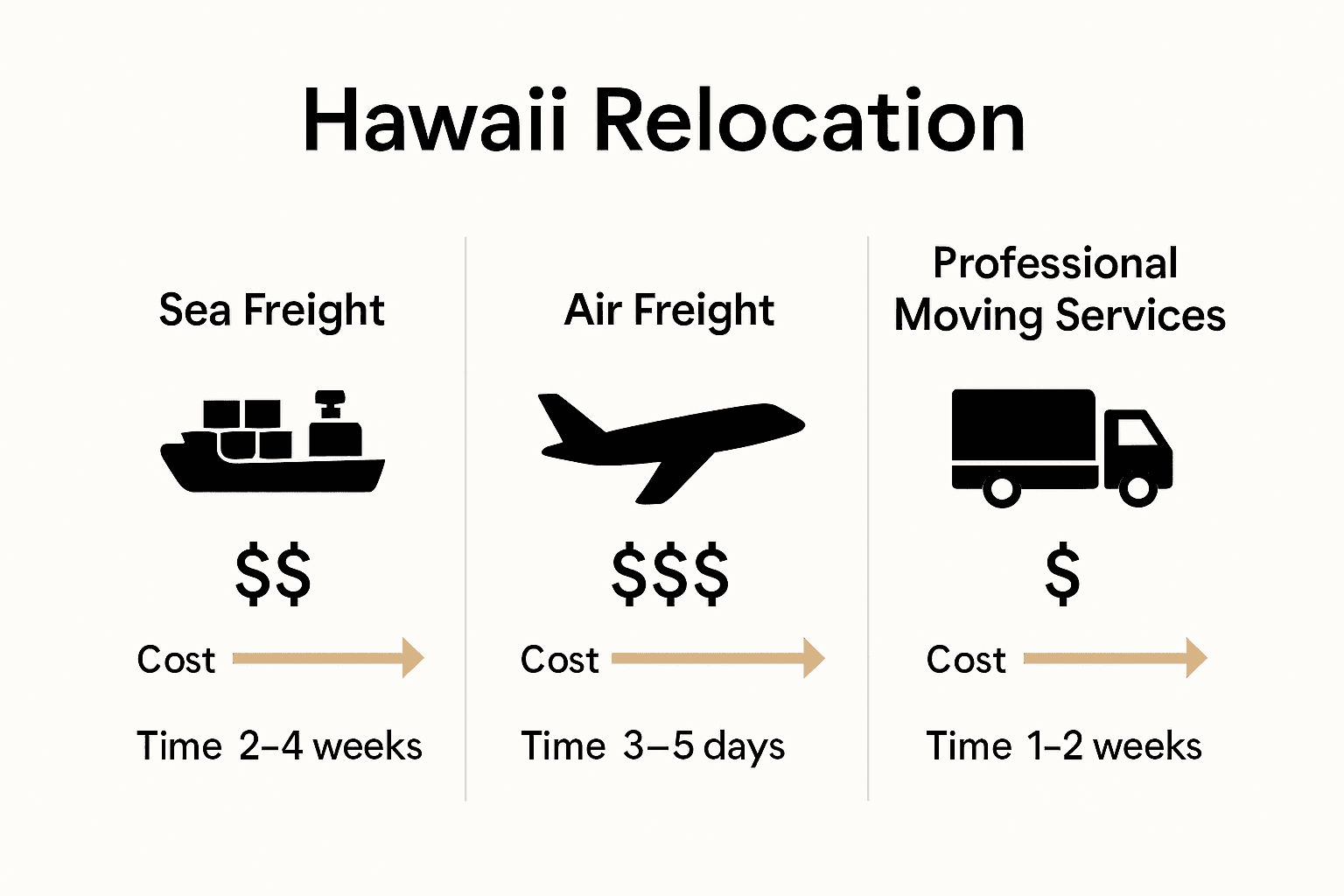 Selecting the right transportation method can significantly impact your overall moving experience and expenses.
Breakdown of Typical Hawaii Moving Costs
Moving to Hawaii involves significant financial planning, with moving expenses varying widely depending on your specific circumstances. University of Hawai’i’s Administrative Procedure 8.863 provides a comprehensive framework for understanding the typical costs associated with relocating to the islands.
Typical moving cost categories include:
- Transportation Expenses
- Sea freight shipping: $3,000 – $7,500
- Air freight shipping: $5,000 – $12,000
- Vehicle transportation: $1,500 – $4,000
- Packing and Handling
- Professional packing services: $800 – $2,500
- Packing materials: $200 – $600
- Insurance for household goods: $500 – $1,500
- Temporary Accommodation
- Short-term rental costs: $2,000 – $5,000
- Hotel stays during transition: $1,500 – $3,000
- Storage fees: $300 – $800 per month
According to the University of Hawai’i at Hilo’s relocation guide, these expenses can vary significantly based on factors like shipment volume, distance, and specific moving services selected. Budgeting an additional 10-15% for unexpected costs is recommended to ensure a smooth transition.
To help manage these complex financial considerations, we recommend exploring our how to finance hawaii condo resource, which can provide additional insights into managing relocation and housing expenses. Planning ahead and understanding these potential costs will help you navigate your Hawaiian moving adventure with confidence.
Hidden Fees and Overlooked Expenses
Moving to Hawaii involves more than just shipping costs and transportation expenses. Hidden fees can quickly escalate your moving budget, catching many relocators by surprise. University of Hawai’i’s Administrative Procedure 8.863 warns that certain moving-related expenses are considered non-deductible and can impact your financial planning.
Often overlooked expenses include:
- Tax-Related Costs
- Home sale transaction fees
- Capital gains tax implications
- Property transfer expenses
- State and federal tax filing adjustments
- Personal Transition Expenses
- Initial grocery and household setup costs
- Temporary living expense overruns
- Vehicle registration and insurance changes
- Professional licensing or certification transfers
- Insurance and Documentation
- Medical record transfer fees
- New insurance policy setup costs
- Address change documentation
- Professional license reinstatement
According to University of Hawai’i’s Tax Services, many relocators underestimate the financial impact of non-deductible expenses like meals during moving and temporary living costs. These seemingly small expenses can accumulate quickly, potentially adding thousands of dollars to your total moving budget.
To help you navigate these complex financial considerations, we recommend exploring our how to finance hawaii condo resource, which offers additional insights into managing unexpected relocation expenses. Proactive planning and a comprehensive budget are your best defense against financial surprises during your Hawaiian move.
Budgeting Strategies and Ways to Save
Moving to Hawaii requires strategic financial planning to manage the significant expenses associated with relocation. University of Hawai’i’s Administrative Procedure 8.863 provides valuable guidance on understanding which moving expenses can be optimized and potentially deducted.
Effective budgeting strategies include:
- Advance Planning
- Create a comprehensive moving spreadsheet
- Research tax-deductible moving expenses
- Build a contingency fund of 15-20% extra
- Compare multiple moving service quotes
- Cost Reduction Techniques
- Sell or donate unnecessary items before moving
- Pack items yourself to reduce professional packing costs
- Schedule move during off-peak seasons
- Negotiate with moving companies
- Use consolidated shipping services
- Financial Documentation
- Track all moving-related receipts
- Understand potential tax deductions
- Separate personal and business moving expenses
- Consult with a tax professional specializing in relocation
The University of Hawai’i at Hilo’s relocation guide recommends carefully documenting allowable moving expenses to maximize potential reimbursements and tax benefits. Keeping meticulous records can potentially save you thousands of dollars during your Hawaiian relocation.
To help manage these financial complexities, we recommend exploring our how to finance hawaii condo resource, which offers additional insights into budgeting and financial planning for your move. Smart preparation can transform a potentially stressful relocation into an exciting new chapter of your life.
Simplify Your Move and Find Your Dream Beachside Condo Today
Moving to Hawaii comes with unique challenges like managing complex moving expenses and hidden fees. The article lays out essential tips on transportation costs, temporary housing, and budgeting strategies to ease your transition. If your goal is to make this exciting yet costly move smoother, having the right condo lined up can reduce stress and help you focus on what matters.

Discover comprehensive resources at BuyOahuCondos.com where you can explore a wide range of condos perfectly suited for your lifestyle and budget. From expert investment guides to detailed listings in Honolulu’s diverse neighborhoods, our site offers tools to compare properties, understand HOA fees, and even schedule tours including virtual walkthroughs. Don’t wait until your moving expenses pile up. Act now to plan your move with confidence and secure your ideal island home before prices rise.
Frequently Asked Questions
What are the main categories of moving expenses to Hawaii?
Moving expenses to Hawaii can be categorized into transportation costs, shipping or freight expenses, travel expenses for you and your family, temporary housing costs, packing material expenses, and professional moving service fees.
How can I budget for unexpected fees when moving to Hawaii?
It is recommended to build a contingency fund of 10-15% of your total moving budget to cover unexpected expenses. Additionally, keep track of all moving-related receipts to maximize potential reimbursements and tax benefits.
What are the transportation options for moving household goods to Hawaii?
The main transportation options for relocating household goods include sea freight, air freight, and professional moving services. Sea freight is typically the most cost-effective for large volumes, while air freight is faster but more expensive. Professional moving services can handle the logistics and packing.
Are there any deductible moving expenses when relocating to Hawaii?
Yes, certain moving expenses can be tax-deductible, such as transportation costs for household goods, temporary storage, and moving-related travel expenses, depending on specific criteria related to the move. It’s advisable to consult tax guidelines for more detailed information.