
How to Compare Honolulu Condos Smartly
A condo can look perfect in photos and still be the wrong buy once you compare the building behind the unit. That is why learning how to compare Honolulu condos matters so much in this market. Two properties with similar price tags can have very different HOA fees, reserve health, rental flexibility, maintenance history, and long-term resale potential.
In Honolulu, buyers are rarely choosing between just two floor plans. They are choosing between lifestyles, building quality, monthly carrying costs, and neighborhoods that feel very different block to block. A unit in Kakaako offers a different ownership experience than one in Waikiki, Ala Moana, Downtown, or Diamond Head. The smartest comparison starts at the building level and then narrows to the unit.
How to compare Honolulu condos the right way
The biggest mistake buyers make is comparing only price per square foot. That metric can help, but it is not enough on its own. A lower price per square foot may look attractive until you realize the building has weak reserves, frequent special assessments, limited owner occupancy, or rules that do not fit your plans.
A better approach is to compare each condo through five filters: location, building economics, unit livability, usage rules, and resale outlook. Once you use the same framework across multiple buildings, patterns become much clearer.
Start with neighborhood fit, not just building appeal
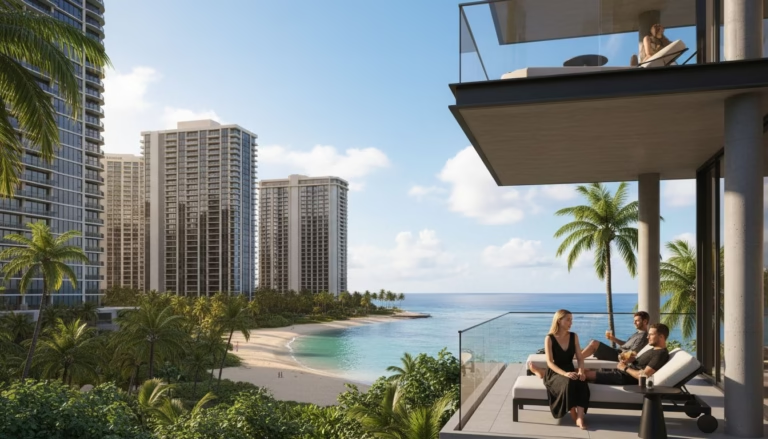
Honolulu is not one condo market. It is a collection of micro-markets. Waikiki may appeal to buyers who want walkability, visitor energy, and strong rental demand, while Kakaako tends to attract buyers looking for newer towers, larger amenity packages, and a more modern urban feel. Ala Moana sits in a useful middle ground for people who want shopping, beach access, and convenience.
That means your first comparison should be about daily life. Ask how often you will drive, whether you want to walk to the beach, if nightlife is a plus or a drawback, and how much value you place on quiet streets versus active retail surroundings. A beautiful condo in the wrong neighborhood will usually feel like the wrong purchase within months.
Compare the monthly cost of ownership
This is where many Honolulu condo decisions are won or lost. Buyers often focus on mortgage payment and purchase price, but the real monthly picture includes HOA dues, insurance exposure, utility coverage, parking value, and possible assessment risk.
Some HOA fees look high because they include more. Others look low because the building is underfunding reserves or pushing costs into future repairs. You need to know what is included. Does the fee cover water, sewer, cable, internet, or electricity? Is there central air maintenance? Are there staffed amenities, extensive common areas, or aging systems that increase operating costs?
A building with a higher fee is not automatically a worse deal. In some cases, it is a more honest one. If reserves are strong and maintenance is consistent, that higher monthly number may reduce surprise costs later. The real question is whether the fee matches the building’s condition, service level, and financial health.
Compare HOA fees, reserves, and assessments
When buyers ask how to compare Honolulu condos intelligently, this is often the section that matters most. HOA fees should always be reviewed alongside reserve funding and the building’s history of special assessments. Looking at fees alone can mislead you.
A well-run building usually shows a pattern of planned maintenance, realistic budgeting, and documented reserve planning. An under-managed building may show delayed projects, owner frustration, and repeated surprise charges. If a building has old elevators, aging plumbing, spalling issues, or outdated fire and life-safety systems, those costs have to land somewhere.
Review whether the association appears proactive or reactive. A proactive board is not a guarantee of a perfect building, but it often signals better long-term ownership economics. This is especially important in older Honolulu and Waikiki towers, where age alone is not the issue – deferred maintenance is.
Understand leasehold versus fee simple
This point is essential in Honolulu. If you are comparing condos and one is leasehold while another is fee simple, they are not truly comparable until you account for that ownership structure. A leasehold condo may have a lower purchase price, but the long-term economics can look very different depending on lease rent, expiration dates, financing options, and resale demand.
For many buyers, fee simple offers more stability and broader lender appeal. Leasehold can work in certain situations, but it requires a much closer review of timelines and future costs. If you mix the two categories into one shopping pool without adjustment, your comparison will be off from the start.
Match building rules to your intended use
Before you get attached to a unit, confirm whether the building allows the way you plan to own it. That means primary residence, second home, part-time occupancy, long-term rental, or any investment strategy you are considering.
Rental rules vary widely in Honolulu. Some buildings are owner-occupant heavy and tightly managed. Others are more flexible for long-term rentals. In resort-zoned or legal short-term rental situations, the rules and economics are different again. Even if you are buying primarily for personal use, future flexibility matters. Life changes, and a condo that limits your exit options can affect both convenience and value.
Parking, pet policies, guest registration rules, smoking restrictions, and move-in procedures also matter more than many buyers expect. These details shape daily living and can influence future buyer demand.
How to compare Honolulu condos beyond the unit itself
A remodeled kitchen is easy to notice. Building quality is less obvious, but often more important. You want to understand what you are buying into over the next five to ten years, not just what looks polished today.
Evaluate the age and condition of major systems. In older buildings, plumbing upgrades, elevator modernization, roof work, and concrete repair can meaningfully affect ownership costs. In newer luxury towers, compare amenity depth carefully. Extensive amenities can support lifestyle and buyer appeal, but they can also push monthly fees higher and create more ongoing maintenance obligations.
Unit orientation is another major factor in Honolulu. Ocean view, mountain view, Diamond Head view, sunset exposure, and trade wind flow all affect livability and resale. Two units in the same line of the same building can feel different depending on floor, heat exposure, noise, and whether the lanai is truly usable.
Compare resale strength, not just current appeal
A condo should fit your life now, but it also helps to think like a future buyer. Buildings with strong reputations, sensible fees, solid management, and enduring locations tend to hold attention better when market conditions tighten. This does not mean every buyer needs a luxury tower. It means every buyer should ask what will still make this building attractive when it is time to sell.
Resale strength often comes from a combination of factors rather than one standout feature. A well-located building with average finishes can outperform a flashier property with weak management or burdensome fees. Consistency, reputation, and buyer pool depth matter.
That is why comparisons should include building identity. Is it known for owner pride, convenience, views, affordability, or investment utility? Or is it known for recurring issues? Those perceptions shape demand.
Build a side-by-side short list
Once you narrow your search, compare three to five buildings side by side rather than ten or fifteen at once. Too many options make the differences harder to see. Use the same criteria for each property: neighborhood, fee simple or leasehold, HOA amount, reserve strength, recent assessments, rental rules, parking, amenities, age, condition, and likely resale position.
This process usually reveals that one or two buildings rise quickly to the top. Sometimes the best choice is not the newest or the cheapest. It is the one with the fewest compromises for your goals.
For buyers using a condo-focused platform like BuyOahuCondos.com, this is where building-level comparison becomes especially useful. Seeing unit inventory is helpful, but understanding how one building stacks up against another is what leads to a more confident decision.
Frequently Asked Questions
How do I compare condo buildings on Oahu?
Compare condo buildings on Oahu by looking at HOA fees (monthly cost and what’s included), reserve fund health, rental restrictions, building age and condition, proximity to amenities, and price per square foot versus comparable units. A reserve study review is essential before any purchase.
What questions should I ask when comparing Oahu condos?
Key questions include: What are the HOA fees and what do they cover? What is the reserve fund percentage funded? Are there pending or recent special assessments? Is the building FHA or VA approved? Are short-term rentals allowed? What is the building’s rental cap? What is the pet policy?
What is the most important factor when comparing Honolulu condos?
The HOA financial health is the single most important factor. A building with low HOA fees but an underfunded reserve is a ticking liability. Review the most recent reserve study, look for 70%+ funding, and check the minutes from the last two years for any special assessment votes or litigation.
A smart Honolulu condo purchase is rarely about finding the perfect listing on day one. It is about comparing the right buildings, asking better questions, and knowing which trade-offs you are actually willing to make. The clearer your framework, the easier it becomes to spot the condo that fits both your lifestyle and your numbers.