

Oahu Condo Investment Steps: A Complete Buyer’s Guide
Over one third of american property investors consider Oahu condos for their unique blend of lifestyle perks and long term growth potential. The vibrant Hawaiian market attracts buyers seeking both personal escapes and reliable income streams. Navigating this process takes more than good instincts. This guide lays out the key steps every investor needs to confidently select, analyze, and purchase the right Oahu condo for their american portfolio.
Table of Contents
- Step 1: Assess Investment Goals And Budget
- Step 2: Research Oahu Condo Markets And Neighborhoods
- Step 3: Compare Buildings, Amenities, And HOA Fees
- Step 4: Evaluate Rental Policies And Investment Potential
- Step 5: Inspect And Verify Property Quality Before Purchase
- Step 6: Finalize Financing And Complete Your Investment
Quick Summary
| Essential Insight | Clarification |
|---|---|
| 1. Define Your Investment Goals | clearly outline whether you want rental income, appreciation, or a personal retreat. This directs budgeting and strategy. |
| 2. Research Key Neighborhood Factors | investigate local market trends, rental rates, and demographic shifts in neighborhoods like Waikiki and Honolulu. |
| 3. Compare HOA Fees and Amenities | evaluate monthly fees and amenities offered by different buildings to assess their impact on your investment returns. |
| 4. Understand Rental Policies | review rental restrictions in condos, particularly in high-demand areas, to ensure income generation aligns with your goals. |
| 5. Conduct a Comprehensive Property Inspection | hire a professional to assess the condo’s condition to avoid future complications and expenses before finalizing your purchase. |
Step 1: Assess Investment Goals and Budget
Investing in an Oahu condo requires strategic goal-based planning that aligns your financial objectives with realistic expectations. Your first move is understanding exactly what you want to achieve with this property investment whether that means generating rental income, building long-term equity, or creating a personal vacation retreat.
Start by conducting a comprehensive financial self assessment. Calculate your total available investment capital, determine your risk tolerance, and map out specific investment outcomes. Are you seeking monthly rental returns? Planning for property appreciation? Wanting a future retirement home? Each goal demands a different strategic approach to budgeting and property selection. Your budget should account not just for the purchase price but also include ongoing expenses like property taxes, maintenance costs, potential renovation needs, and monthly homeowners association fees.
Pro tip: Create a detailed spreadsheet breaking down all potential expenses and projected income streams. This will help you understand the true financial commitment of your Oahu condo investment and prevent unexpected financial strain. Remember that investment goals involve carefully calculating potential returns to ensure alignment with your long-term financial objectives.
Once you have clarity on your investment goals and budget, you will be ready to explore specific Oahu neighborhoods and property types that match your financial strategy. The next step involves researching the most promising locations for your investment approach.
Step 2: Research Oahu Condo Markets and Neighborhoods
Understanding the Oahu real estate market requires a comprehensive approach to evaluating potential investment opportunities. Your goal is to analyze local market factors that will help you make an informed decision about your condo investment.
Begin by diving deep into neighborhood research. Focus on key economic indicators and real estate trends that signal strong investment potential. This means examining specific market conditions such as median property prices, average price per square foot, rental income potential, and local demographic shifts. Pay close attention to neighborhoods like Waikiki, Honolulu, and Ko Olina, each offering unique investment characteristics. Look into factors like proximity to amenities, public transportation, future development plans, and historical property value appreciation rates.
Pro tip: Create a detailed comparison spreadsheet for different Oahu neighborhoods. Track metrics like average rental rates, vacancy rates, and potential appreciation. This systematic approach will help you identify the most promising areas for your condo investment. Some key regions to investigate include the urban core of Honolulu, the tourist-friendly Waikiki, and emerging markets like Oahu neighborhood guides can help you understand the nuanced differences between each location.
Once you have thoroughly researched and compared different Oahu markets, you will be prepared to move forward with identifying specific properties that align with your investment goals.
Step 3: Compare Buildings, Amenities, and HOA Fees
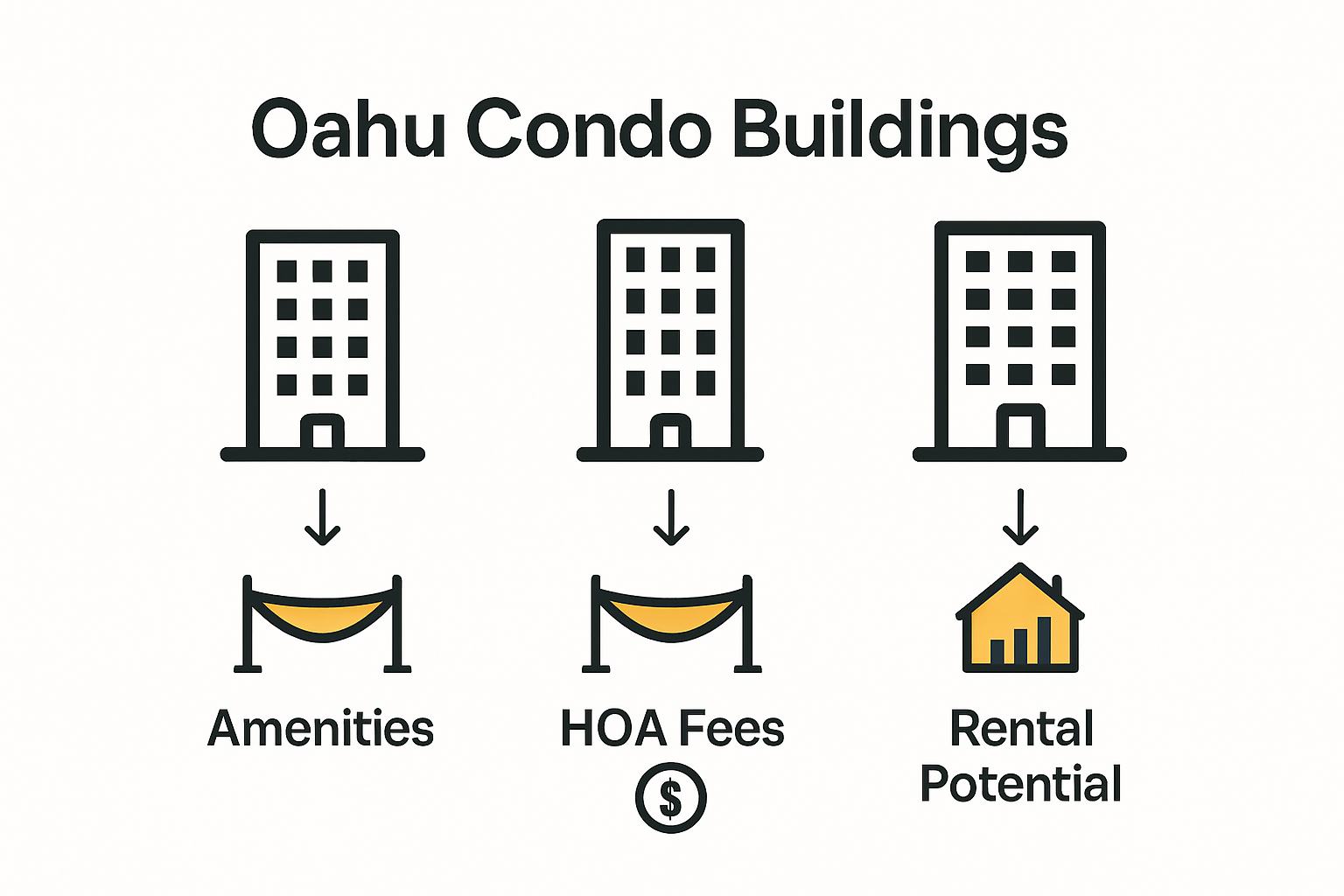
Comparing Oahu condo buildings requires a systematic approach to evaluating potential investments. Your mission is to analyze critical property factors that will significantly impact your long-term financial performance.
Dive deep into understanding the nuanced details of each condo building. High monthly fees and potential restrictions can dramatically influence your investment returns, so scrutinize every detail carefully. Examine HOA fees, which can vary widely across different properties in neighborhoods like Waikiki and Honolulu. Look beyond the sticker price and investigate what those fees cover such as maintenance, security, pool access, parking, and potential future special assessments. Pay special attention to amenities that could drive rental demand or property value appreciation like fitness centers, concierge services, ocean views, or proximity to public transportation.
Pro tip: Create a comprehensive comparison spreadsheet that tracks key metrics for each potential condo building. This should include monthly HOA fees, amenity lists, rental restrictions, parking availability, and potential rental income potential. Some key resources like Oahu condo comparison tips can provide additional insights into making a smart investment decision.
Once you have meticulously compared buildings and their associated costs, you will be prepared to narrow down your potential investment properties and move toward making an informed selection.
Step 4: Evaluate Rental Policies and Investment Potential
Understanding the rental landscape is crucial when investing in an Oahu condo. Your primary objective is to thoroughly analyze potential rental restrictions that could impact your investment returns.
Delve into the intricate details of rental policies for each potential property. Condo associations often impose specific guidelines that can significantly influence your ability to generate income. Investigate critical factors like minimum rental periods, maximum annual rental days, owner occupancy requirements, and any restrictions on short-term vacation rentals. Pay special attention to neighborhoods like Waikiki, where rental regulations can be particularly complex. Examine occupancy rates, average rental prices, and seasonal demand fluctuations that could affect your investment strategy. Consider factors such as proximity to tourist attractions, public transportation, and local amenities that might make your property more attractive to potential renters.
Pro tip: Create a comprehensive spreadsheet that tracks rental policy details, potential income streams, and market demand for each property you are considering. Resources like rental income potential guides can provide additional insights into maximizing your investment returns. Research local regulations thoroughly to avoid unexpected restrictions that could limit your rental opportunities.
Once you have carefully evaluated the rental policies and investment potential, you will be well positioned to make an informed decision about your Oahu condo investment.
Step 5: Inspect and Verify Property Quality Before Purchase
Inspecting a potential Oahu condo investment requires a meticulous approach to ensure you are making a sound financial decision. Your primary goal is to thoroughly evaluate the property’s condition and identify any potential issues that could impact your investment.
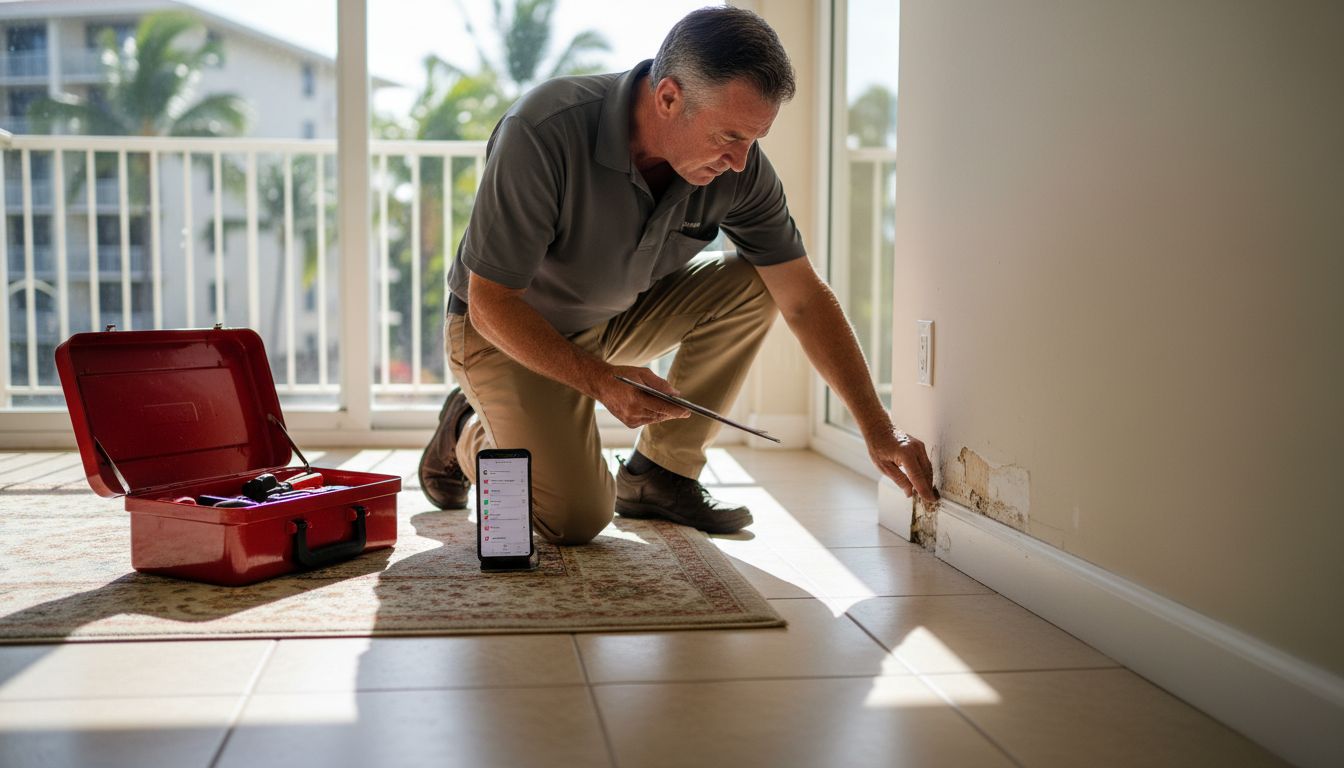
Comprehensive property inspection involves examining multiple critical aspects beyond surface level appearances. Start with a professional home inspection that covers structural integrity, electrical systems, plumbing, roof condition, and potential water damage. Pay special attention to the building’s overall maintenance history, age of major systems, and recent renovations. Look closely at interior details like flooring, wall conditions, window quality, and appliance functionality. Investigate the building’s exterior, checking for signs of wear, structural integrity, and potential maintenance challenges. Consider the unit’s layout, natural light, views, and potential for future improvements or renovations.
Pro tip: Consider hiring a specialized Oahu condo inspector who understands the unique environmental challenges of Hawaiian properties, such as salt air corrosion, humidity impacts, and tropical weather concerns. Leverage resources like the Oahu condo inspection process guide to ensure you do not overlook any critical details during your property evaluation. Documenting every finding can help you negotiate price or request repairs before finalizing your purchase.
Once you have completed a thorough property inspection, you will be prepared to make an informed decision about your potential Oahu condo investment.
Step 6: Finalize Financing and Complete Your Investment
Reaching the final stage of your Oahu condo investment requires strategic financial planning and careful decision making. Your objective is to secure the most advantageous financing structure that aligns with your long term investment goals.
Start by calculating your estimated return on investment to ensure the financial viability of your purchase. This involves carefully analyzing potential rental income, subtracting projected annual expenses, and determining your potential net returns. Work closely with a local mortgage specialist who understands the unique Hawaiian real estate market. Explore various financing options including conventional loans, portfolio loans, and investor specific mortgage products. Prepare comprehensive documentation including proof of income, tax returns, investment portfolio, and detailed property analysis. Assess your down payment strategy carefully considering how it impacts your overall investment returns and monthly cash flow.
Pro tip: Periodically monitor and reassess your investment strategy after purchase. Create a systematic approach to tracking performance, reviewing fees, and potentially rebalancing your real estate portfolio. This ongoing evaluation will help you maximize your investment potential and quickly adapt to market changes. Consider consulting with a financial advisor who specializes in Hawaii real estate investments to help refine your long term strategy.
Once you have secured financing and completed all necessary documentation, you will be ready to take ownership of your Oahu condo investment and begin your journey as a property owner.
Take the Next Step Toward Smart Oahu Condo Investment
Navigating the complex process of purchasing an Oahu condo can feel overwhelming with all the factors like assessing investment goals, analyzing HOA fees, and understanding rental restrictions. If you want to avoid costly mistakes and identify the best neighborhoods and properties that align with your financial goals, our full suite of resources at Oahu Condo Buying Tips | Honolulu & Waikiki Advice is here to help. 
Experience the confidence of making an informed decision with expert guides that cover everything from market insights to property comparisons. Start exploring detailed investment strategies with Honolulu Condo Investment Guides | ROI & Rental Tips and take advantage of tailored tools designed specifically for buyers like you. Don’t wait to secure your ideal Oahu condo investment. Visit BuyOahuCondos.com now and get personalized support to turn your condo goals into reality.
Frequently Asked Questions
What are the first steps to assess my investment goals for an Oahu condo?
Start by clearly defining your investment objectives. Determine whether you want to generate rental income, build long-term equity, or have a vacation home.
How do I research the best Oahu neighborhoods for condo investments?
Analyze local market factors such as median property prices, rental income potential, and neighborhood amenities. Create a comparison chart to evaluate different areas based on these metrics.
What key factors should I consider when comparing Oahu condo buildings?
Evaluate critical factors like monthly HOA fees, available amenities, and rental restrictions for each building. Create a spreadsheet to document these attributes for easy comparison.
How can I verify rental policies that may affect my investment potential?
Review the specific rental policies for each property, focusing on minimum rental periods and owner occupancy requirements. Document these details in your investment planning to avoid any unexpected restrictions.
What steps should I take to ensure a thorough property inspection before purchasing a condo?
Conduct a professional home inspection that covers critical aspects like structural integrity, electrical systems, and plumbing. Make a checklist of important areas to inspect so you don’t overlook any details during your evaluation.
How can I finalize the financing for my Oahu condo investment?
Calculate your estimated return on investment and explore various financing options available in the market. Gather necessary documentation and consult a mortgage specialist to find the best loan that suits your investment strategy.



2 Comments