Fee Simple vs Leasehold Condos in Oahu
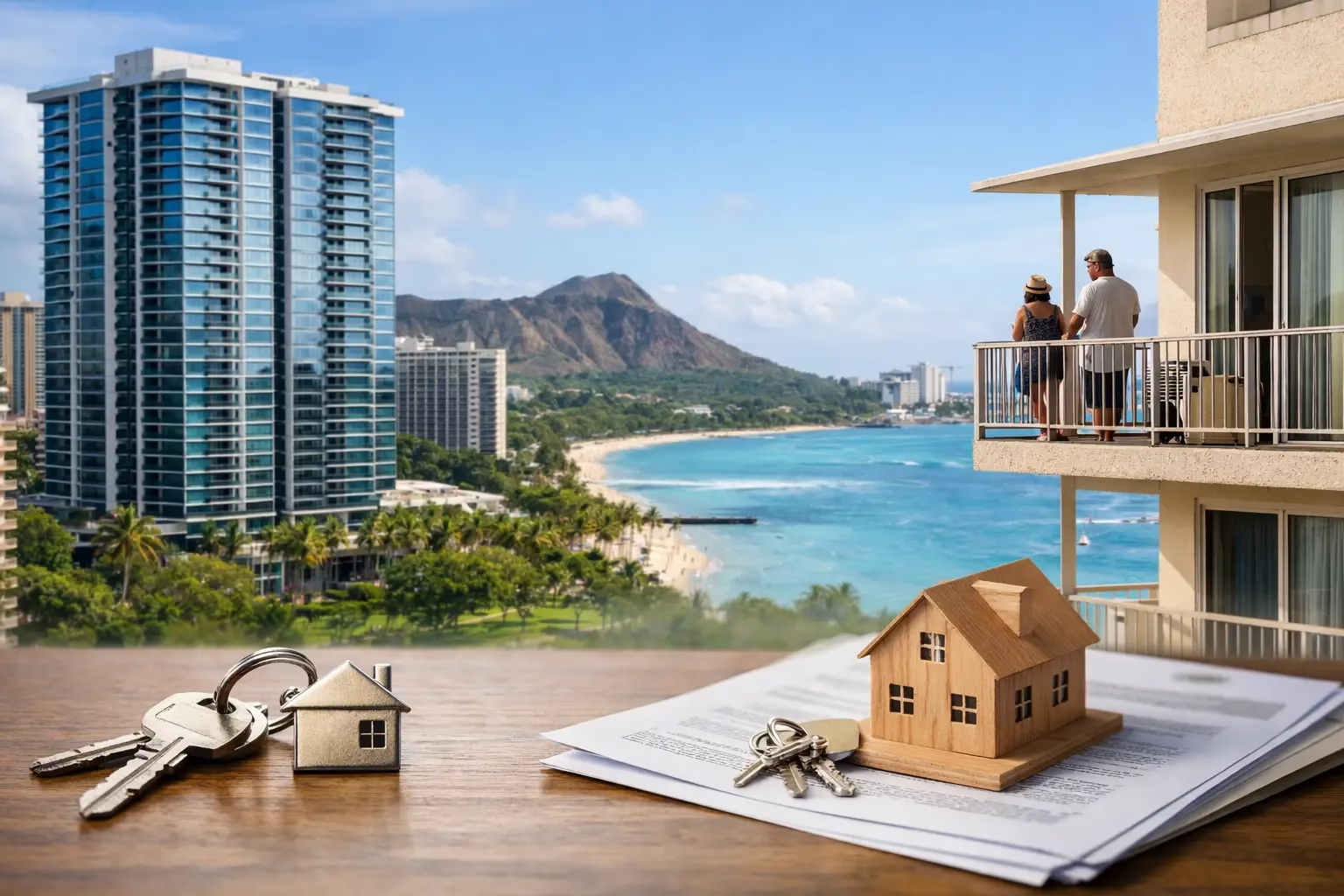
A condo in Waikiki can look like a bargain until you notice one detail in the listing – leasehold. That single word can change financing options, long-term value, monthly costs, and your exit strategy. When buyers compare fee simple vs leasehold condos, they are not just comparing price. They are comparing two very different ownership structures.
On Oahu, this matters more than it does in many mainland markets because leasehold condos are still part of the local inventory, especially in Honolulu and Waikiki. Some buyers should seriously consider them. Others should avoid them altogether. The right choice depends on how long you plan to own, how you will finance, and whether you are buying for lifestyle, rental income, or long-term appreciation.
Fee simple vs leasehold condos: the core difference
With a fee simple condo, you own the unit and an undivided interest in the land beneath the building. That is the standard form of ownership most mainland buyers expect. You can sell your interest, pass it to heirs, and generally benefit from land value appreciation over time.
With a leasehold condo, you own the unit for the remaining term of a ground lease, but you do not own the land. The land is owned by another party, often a trust, estate, or larger landholder, and you pay for the right to use that land under the lease terms. When the lease expires, the value of your interest can drop sharply, and in some cases ownership rights may revert based on the lease agreement.
That is why two condos in the same area can have dramatically different asking prices. A leasehold unit may appear far cheaper upfront, but the lower sticker price does not automatically make it the better deal.
Why leasehold condos exist in Hawaii
Leasehold is not a glitch in the market. It has historical roots in Hawaii, where large landowners retained ownership of land while allowing residential or commercial development through long-term leases. Many of those leases were structured decades ago, and some buildings still operate under those original terms or renegotiated versions.
For Oahu buyers, that means ownership type is not a minor technical detail. It is a major factor in valuation. In neighborhoods like Waikiki, you may still find leasehold condos that attract cash buyers, investors seeking short-term economics, or buyers prioritizing location over long-term land ownership.
How fee simple ownership usually fits buyers best
For most owner-occupants and long-term buyers, fee simple is the cleaner and safer structure. You have more predictable ownership rights, broader lender acceptance, and a much stronger resale audience when it is time to sell.
Fee simple condos also tend to hold value better over time because land ownership is part of the package. In a land-constrained market like Honolulu, that matters. Even if two buildings have similar amenities and monthly fees, the fee simple building usually has wider demand because buyers understand the structure and lenders are more comfortable with it.
This is especially relevant for relocation buyers, retirees, and second-home purchasers who want simplicity. If your goal is stable ownership in Kakaako, Ala Moana, or a quality Honolulu building, fee simple often aligns better with that plan.
When leasehold condos can still make sense
Leasehold is not automatically bad. It is situational.
Some buyers are intentionally looking for lower entry pricing in expensive neighborhoods. A leasehold condo may offer access to Waikiki or oceanfront locations that would be out of reach on a fee simple basis. If the lease has many years remaining, the monthly lease rent is manageable, and the buyer plans to hold only for a defined period, the economics can work.
This can appeal to cash buyers, buyers seeking a shorter ownership window, or investors who care more about near-term use than long-term appreciation. A retiree who wants a Honolulu base for the next 10 years may evaluate leasehold differently than a first-time buyer hoping to build equity over several decades.
The point is not that leasehold is good or bad. The point is that it must match the buyer’s timeline.
The biggest financial issues buyers need to check
The purchase price is only the starting point. With fee simple vs leasehold condos, the deeper analysis is in the monthly and future costs.
For fee simple units, the focus is usually on HOA dues, building reserves, special assessment risk, insurance, and rental policy. Those are still critical in leasehold buildings, but lease rent adds another layer. In some cases lease rent is fixed for a period. In others, it resets based on appraisal schedules or other formulas written into the lease.
That reset risk matters. A condo that looks affordable today can become much less attractive if lease rent jumps later. Buyers also need to know whether the lease includes a fixed expiration date, whether there are renegotiation rights, and whether there has been any discussion of fee purchase opportunities.
If you are evaluating a leasehold condo, ask for the lease expiration date early. Do not wait until you are deep into escrow thinking it is a small detail. It is one of the main drivers of both value and financing.
Financing differences can be significant
One of the biggest practical differences between fee simple vs leasehold condos is financing availability.
Fee simple condos are generally much easier to finance, assuming the building itself meets lender requirements. More lenders are willing to underwrite them, and buyers usually get a wider range of loan products and stronger resale demand from future financed purchasers.
Leasehold condos can be harder. Some lenders will not finance them at all. Others may only finance leasehold properties if the remaining lease term meets very specific requirements. As the lease gets shorter, financing becomes more difficult, which can reduce the future buyer pool and put pressure on resale value.
That financing constraint alone pushes many buyers toward fee simple, even when a leasehold unit seems attractively priced.
Resale and appreciation: where the gap usually widens
If your goal includes appreciation, fee simple usually has the advantage.
Because fee simple ownership includes land interest and broader buyer acceptance, it tends to perform better over long holding periods. That does not mean every fee simple condo outperforms every leasehold condo. Building quality, neighborhood, maintenance, and timing still matter. But as a category, fee simple offers stronger long-term marketability.
Leasehold values often become more sensitive as the expiration date gets closer. Even if the unit itself is attractive, buyers start discounting for the shrinking lease term and the financing challenges that come with it. That can create a very different resale experience than many mainland buyers expect.
What Oahu condo buyers should compare before deciding
This is where building-level analysis matters more than broad labels. Two fee simple buildings can be very different investments. The same is true for leasehold properties.
Look at the ownership type first, then compare HOA fees, reserve strength, maintenance condition, special assessment history, rental rules, parking, amenities, and neighborhood fit. If the property is leasehold, layer in lease rent, expiration date, renegotiation terms, and financing options.
A buyer focused on lifestyle may accept a leasehold structure to secure a walkable Waikiki location near the beach. A buyer focused on future resale flexibility may decide that a fee simple condo in a less tourist-driven pocket of Honolulu offers a better overall risk profile.
That is why condo shopping on Oahu works best when you compare whole buildings, not just listing photos and price per square foot.
Which option is better for you?
If you want long-term ownership, better financing flexibility, and stronger resale positioning, fee simple is usually the better fit.
If you are comfortable with more complexity, understand the lease terms clearly, and are buying with a shorter or very specific timeline, a leasehold condo may still be worth considering. The lower purchase price can be real value, but only if you are fully accounting for lease rent, expiration risk, and future buyer demand.
For many buyers, the smartest move is not ruling leasehold in or out too early. It is asking sharper questions. On Oahu, ownership structure affects far more than legal title. It affects how the condo behaves as an asset.
If you want help comparing specific buildings, neighborhoods, or ownership structures, BuyOahuCondos.com is built for exactly that kind of condo-focused analysis. A good condo decision is rarely about finding the cheapest unit. It is about knowing what you are really buying before you commit.